

Puppy chews: choosing for size, firmness and teething
Choosing a first chew: what to check for size and firmness, how teething affects the choice and which feeding details you need before buying.


When choosing puppy chews, look closely at the individual piece. How big is it, how firm is it, and what does the manufacturer say about feeding it? An age mentioned in a general article doesn’t replace those checks.
This guide covers the questions that come with choosing for a young dog. Our guide to choosing dog chews explains the broader differences between ingredients and formats.
When can a puppy have a chew?
Ask about the starting age and feeding instructions for the specific product. If that information is missing, neither the length of the piece nor the word “natural” can fill the gap. Make a note of its name, ingredient and format. You can use those details when asking the manufacturer or your vet.
The useful question before buying is: “Does this product suit my puppy?” A general shopping list arranged by week of age can’t make that decision for every dog.
Check firmness during teething
VCA warns that extremely hard objects, including antlers, bones and hard nylon products, can damage teeth. It recommends chew toys with some give. Ask your practice which chewing activities suit your puppy. VCA: puppy teething toys.
Don’t transfer a description of one product to every piece from the same animal. “Beef” tells you the ingredient. It doesn’t tell you how firm an ear, skin or lung will be. That’s why we show the form and texture of each product.
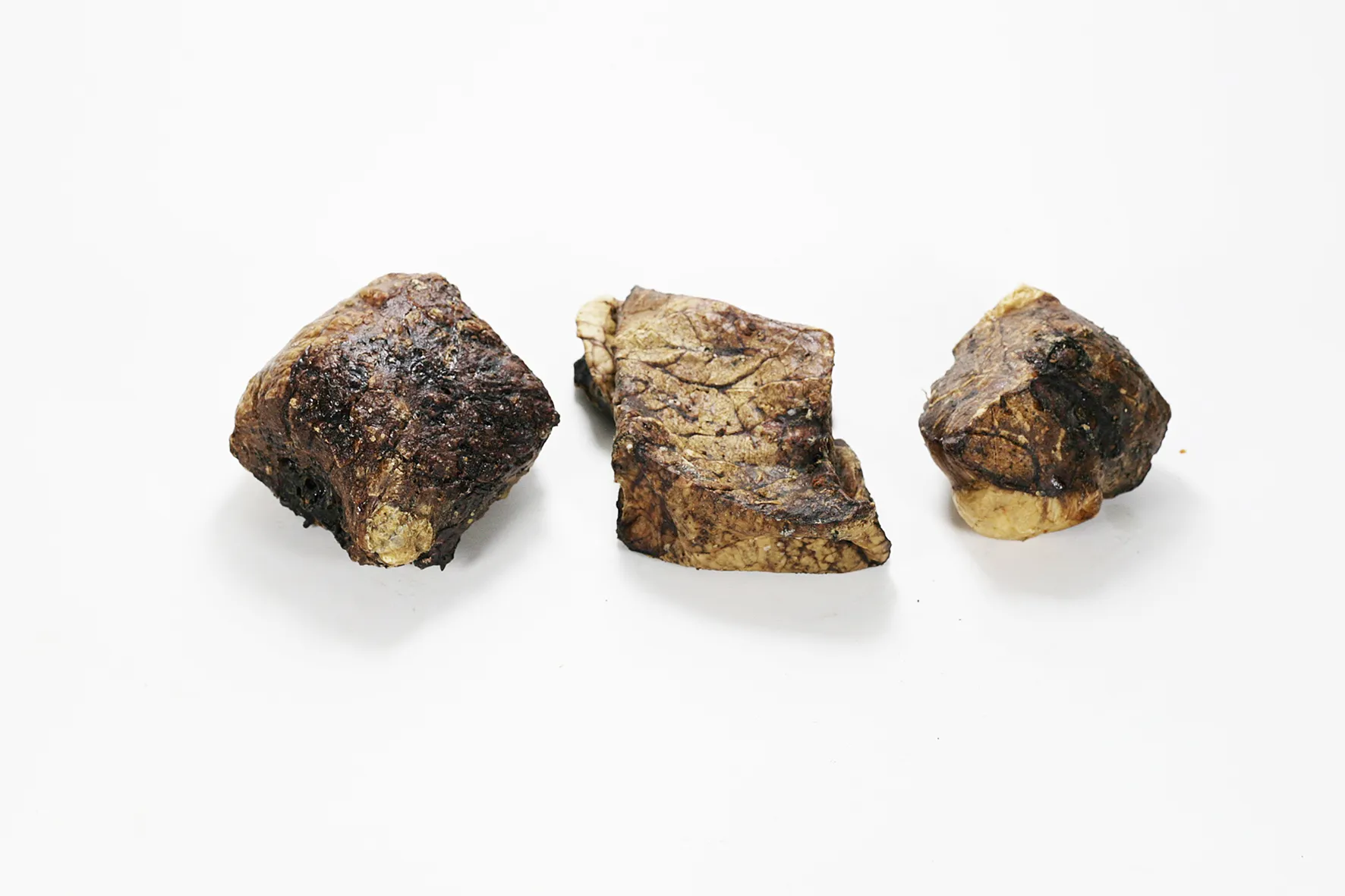 Beef lung: view product details
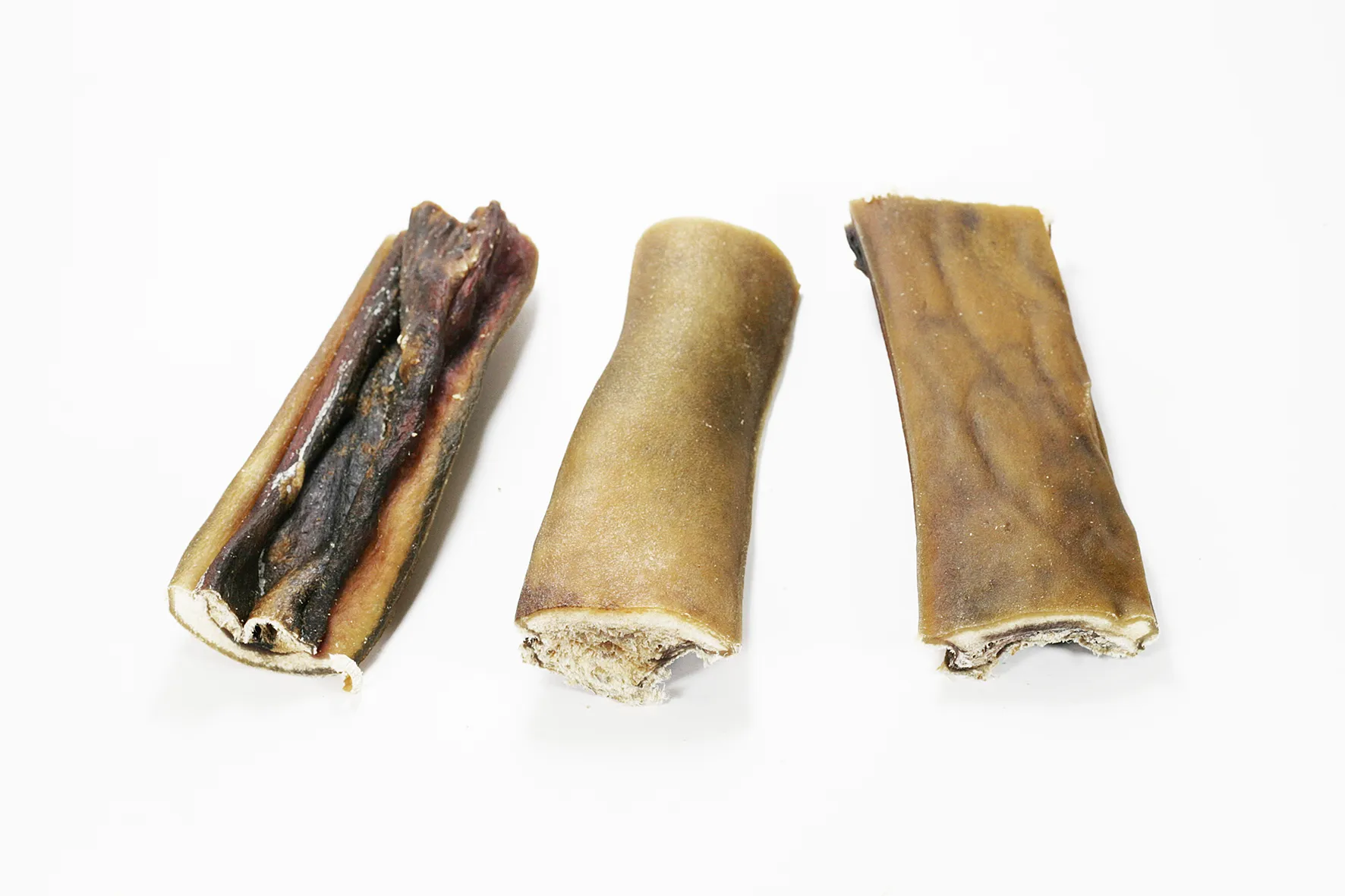 Beef skin: view product details
Two beef formats for comparison. These photos are not to scale and do not establish a suitable age for puppies. Check the details of the individual product.
Consider the size and shape of the piece
WSAVA recommends an appropriate size and shape, along with supervision when offering treats, chews and toys. WSAVA: feeding treats to your dog. A product photo shows the format. The stated measurement helps you judge it, but measurements of natural pieces are approximate.
Keep watching during chewing, too. VCA advises removing a toy if it breaks apart or pieces are missing. Stay with your puppy and check the condition regularly. VCA: supervising chewing.
Include treats in the daily allowance

WSAVA advises keeping extra treats below ten percent of daily calories. They shouldn’t replace a balanced meal. Discuss the amount and type of treats with your veterinary team. WSAVA: treat allowance and feeding.
You can only turn that into a number of grams when you know the product’s energy content and your dog’s needs. If the pack has no calorie information, WSAVA recommends asking the manufacturer. Protein and fat percentages alone aren’t a ready-made portion guide.
A training treat or a longer chewing break?
A quick reward during training needs a different format from a chew offered for a break. Decide how you plan to use the snack first. Its animal ingredient alone does not make a large, firm natural piece a training treat.
Our product pages let you compare size, chew firmness and practical properties. Check how easily a piece can be divided: a product that is difficult to split gives you less control over portions. These details describe the product. You still need to check the age guidance for your puppy separately.
Your quick buying checklist
Before choosing a pack, make sure you can answer these questions:
- What exactly is the ingredient?
- Is there age guidance and specific feeding advice?
- Do the piece size and firmness suit your puppy?
- Is it for a small reward or a chewing break?
- How will you include the treat in the daily food allowance?
Ask before buying if any of those details are missing. A specific question such as “Is there age guidance and calorie information for this product?” is easier to answer than a request for the best chew for every puppy.
Compare the product details before buying
Our dog chew range lets you compare ingredients and formats. Each product page lists its own details. Use them to help with the choice rather than guessing a missing starting age.
For advice on what chewing can do for teeth, read our guide to dog chews and dental care. Once you’ve established what suits your puppy, you can see the available packs in the shop.
Sources and editorial responsibility

Product details and product photos come from the Kaumaster range. The linked product pages list the declared composition, analytical values and available packs.
The puppy photos illustrate everyday life with a young dog. They do not show a particular chew or recommend a product.
General guidance on treat allowance, supervision and suitable piece size: WSAVA: Feeding treats to your dog (PDF). This is general feeding guidance, not veterinary approval of an individual product.