
Dog dental care: What chewing can and cannot do
A chew does not replace a toothbrush. Separate a chewing break from dental care with evidence, then compare the actual pieces and ingredients.

Chewing does not replace brushing your dog’s teeth. Specific dental products may supplement care. A dried natural chew does not become a tested dental product just because it is hard.
For a chewing break, compare size, shape and composition. If you are looking for help with plaque or tartar, focus on your dog’s care routine and evidence for the particular product.
Do chews clean dogs’ teeth?
AniCura explains that specific chews can have a mechanical effect on plaque. That does not establish the same benefit for every snack. Regular manual dental care is still needed.
The Veterinary Oral Health Council recommends daily toothbrushing. Ask your vet which brush and technique suit your dog. Existing dental problems need an individual assessment.
We do not claim tested plaque or tartar removal for our natural chews. The comparison below concerns shapes and ingredients, not dental treatment.
How do you choose a chew for a break?
Look at the actual piece. Your dog should be able to work on it calmly rather than gulp it whole. Piece size and firmness tell you more about that choice than a label such as “dental snack”.
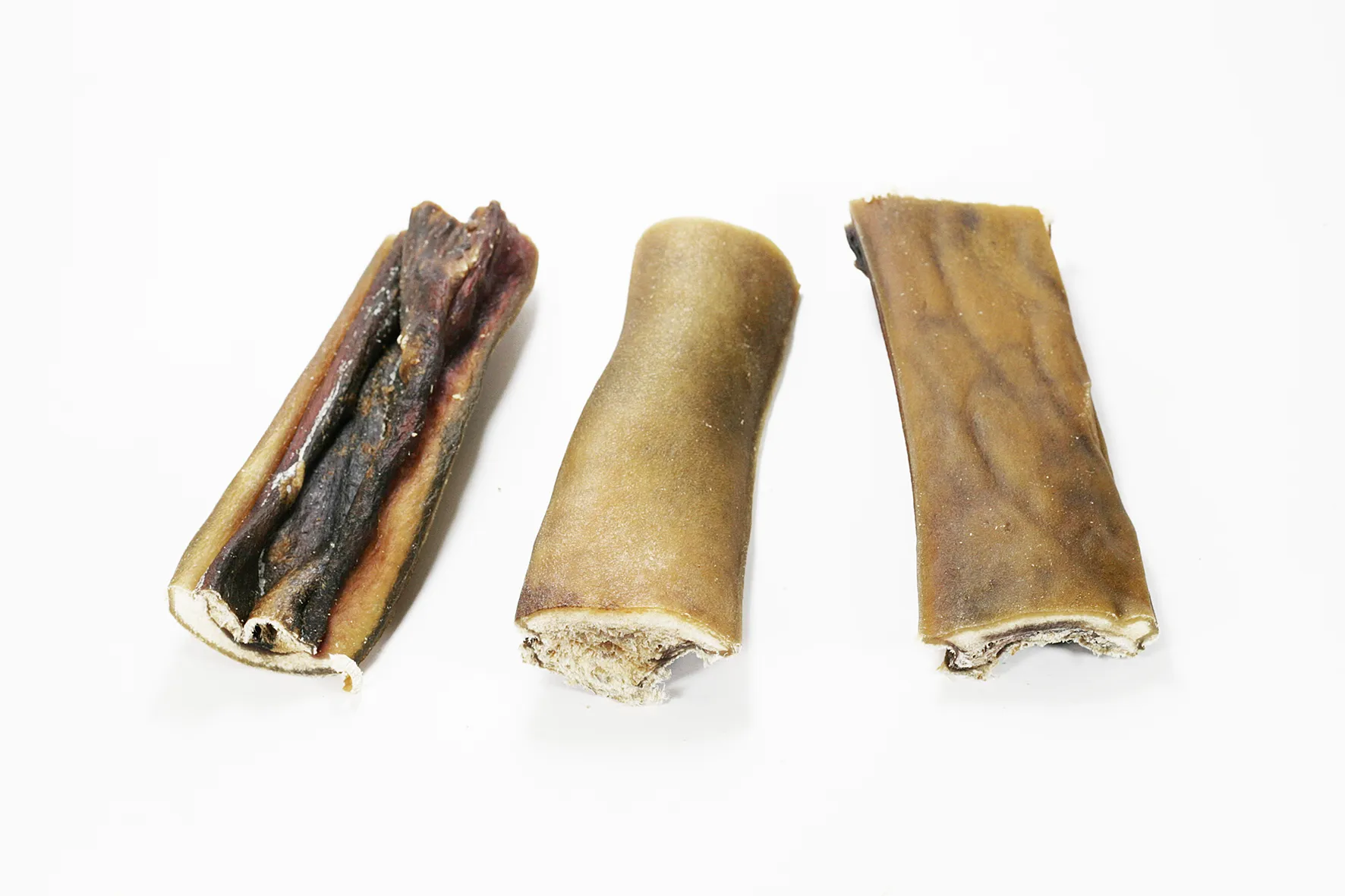 Beef skin without fur, about 15 cm
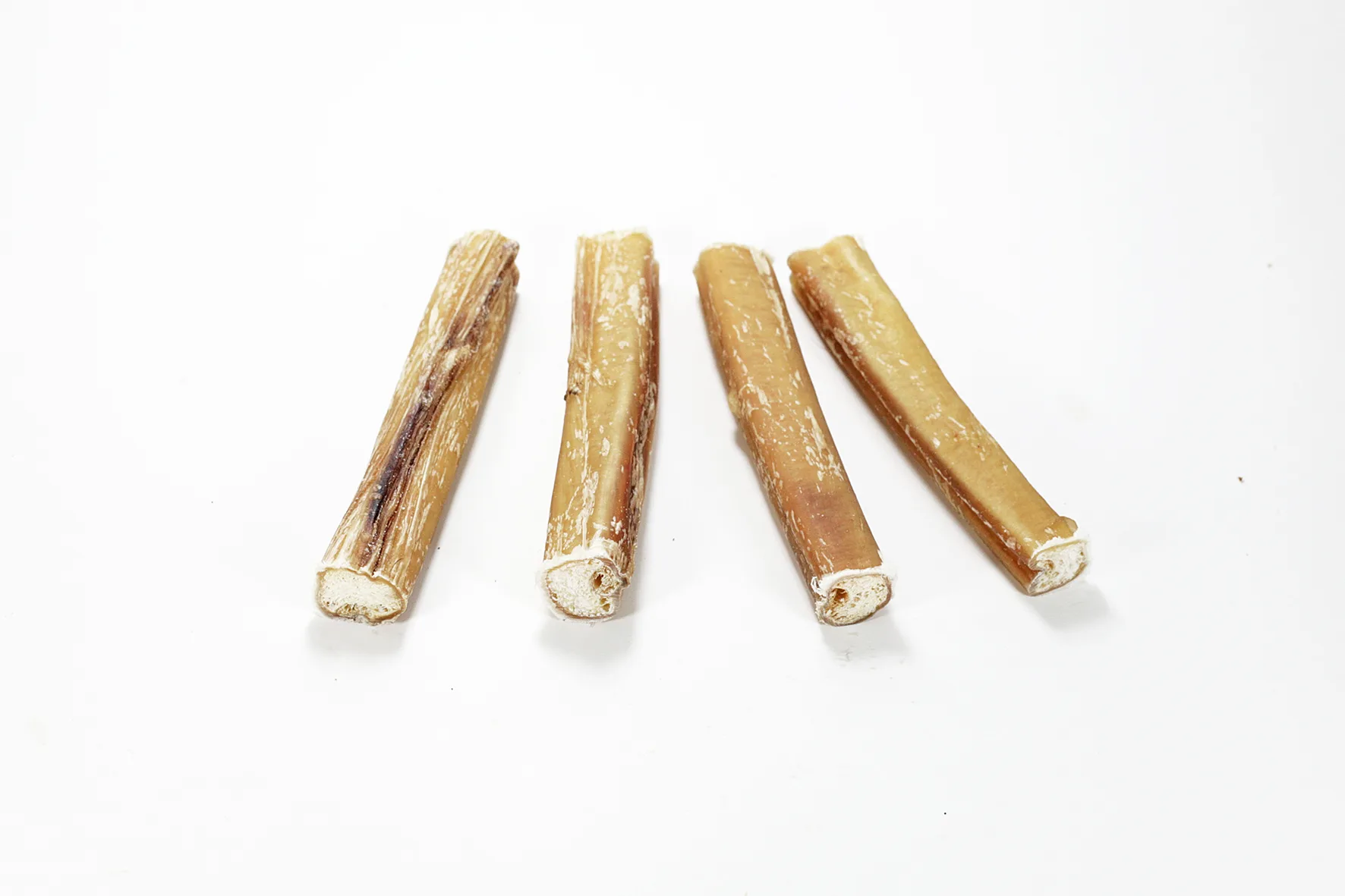
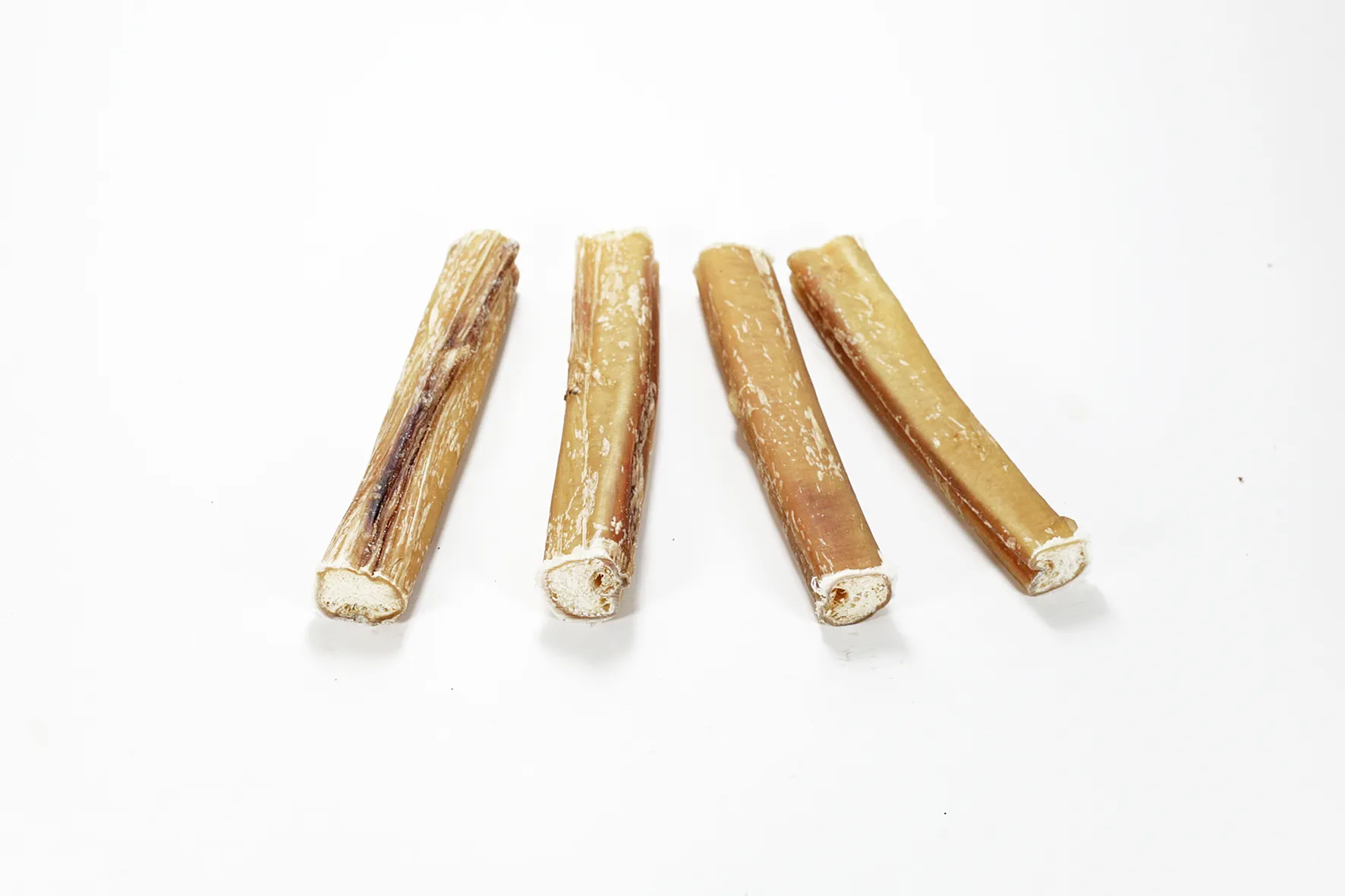 Beef pizzle, about 12 cm
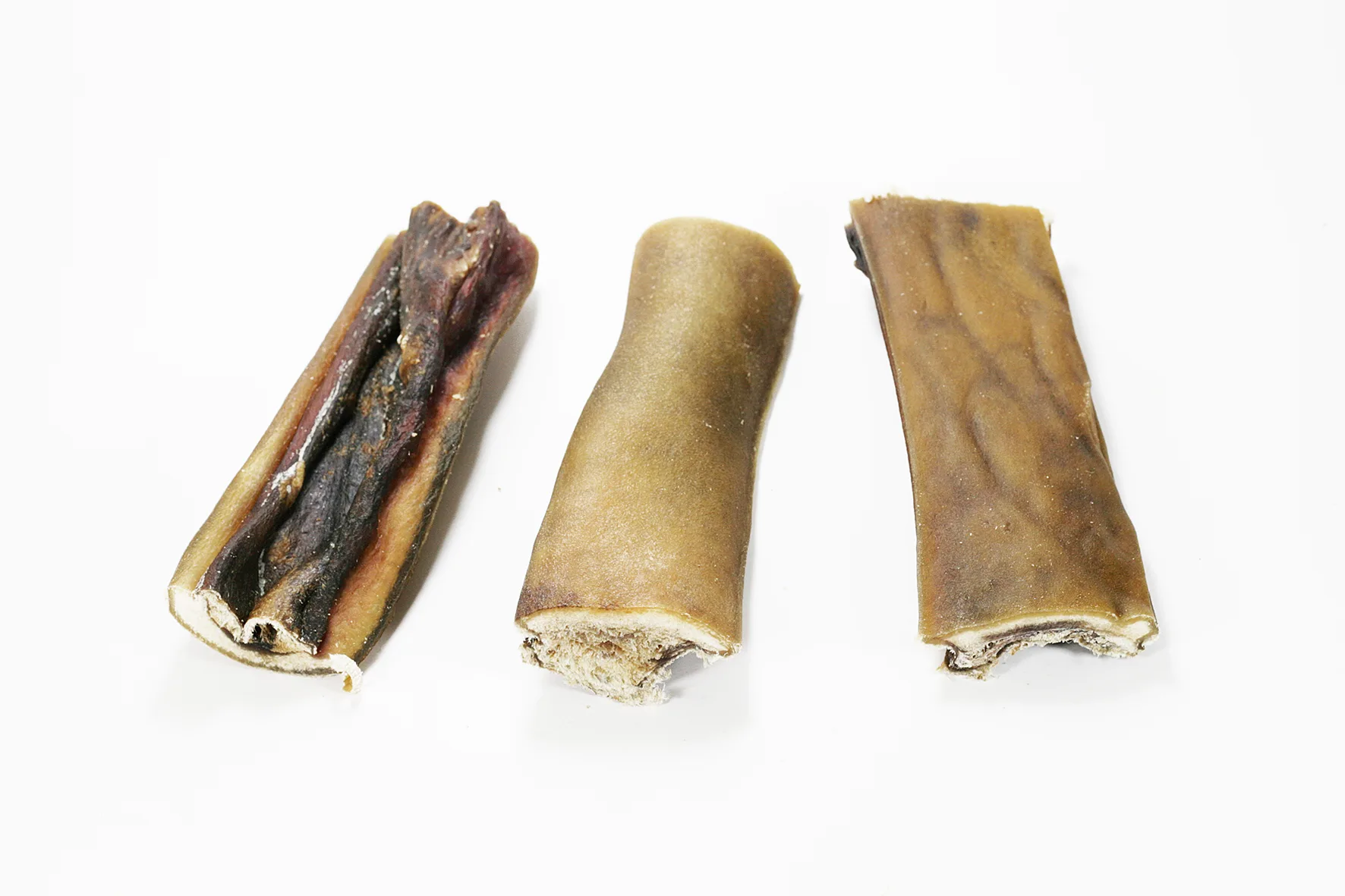
Two different natural pieces. The photos show their shapes, not proven dental efficacy or a comparison at the same scale.
Beef skin without fur contains the declared ingredient beef skin. Our beef pizzle consists of beef pizzle. Both have long piece formats; thickness and shape can vary. The shop lists composition, analytical values, available packs and the current final price.
For other forms, read our guide to choosing dog chews. You can also compare rabbit ears with and without fur.
Is a harder chew better for teeth?
Hardness does not prove a dental benefit. The WSAVA advises avoiding excessively hard chews and sharp edges. Choose for your dog and watch how they actually chew.
Stay nearby and remove remaining pieces that have become too small. If your dog has dental problems or a prescribed diet, discuss the choice with your vet first. A general guide cannot assess your dog.
Can a chew remove existing tartar?
Do not rely on a snack for that. AniCura describes tartar as a hard deposit that simple brushing cannot remove. Unusual bad breath, bleeding or trouble eating warrant veterinary assessment. A harder piece is not a solution.
Before buying, check four things
- Does the individual piece fit your dog’s size and chewing habits?
- Its declared animal ingredient should fit their feeding plan.
- Include snacks in the day’s food allowance.
- Decide whether you want a chewing break or a product with evidence for dental care.
Compare our natural chews in the shop by ingredients and piece size. For a specific dental problem, speak to your vet.
Sources and editorial responsibility

Product details and photos come from the Kaumaster range. The linked product pages list the declared composition, analytical values and available packs.
General guidance on treat allowance, supervision and suitable piece size: WSAVA: Feeding treats to your dog (PDF). This is general feeding guidance, not veterinary approval of an individual product.