
How to choose dog chews
Ears, skin, lung or beef pizzle? Start with your dog's size and chewing habits, then compare ingredients and form.

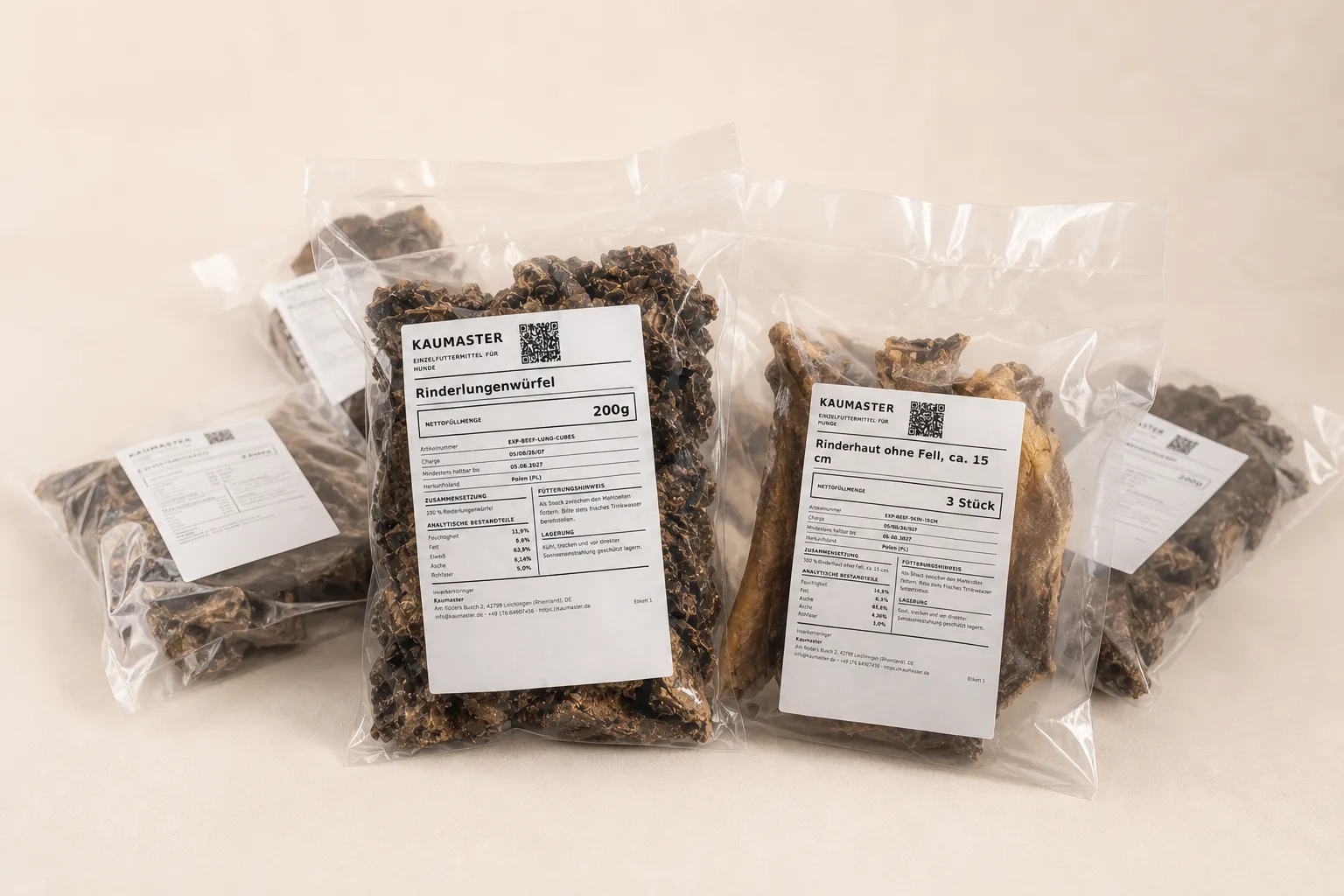
Dog chews differ more than they first appear. A whole ear, a strip of dried skin and loose beef lung are different in shape, firmness and how they can be used. The right choice depends on your dog, not just the product name.
This guide helps you compare them. You can find the full composition, analytical values and available pack sizes on each product page and in the shop.
First decide: a longer chew or a small reward?
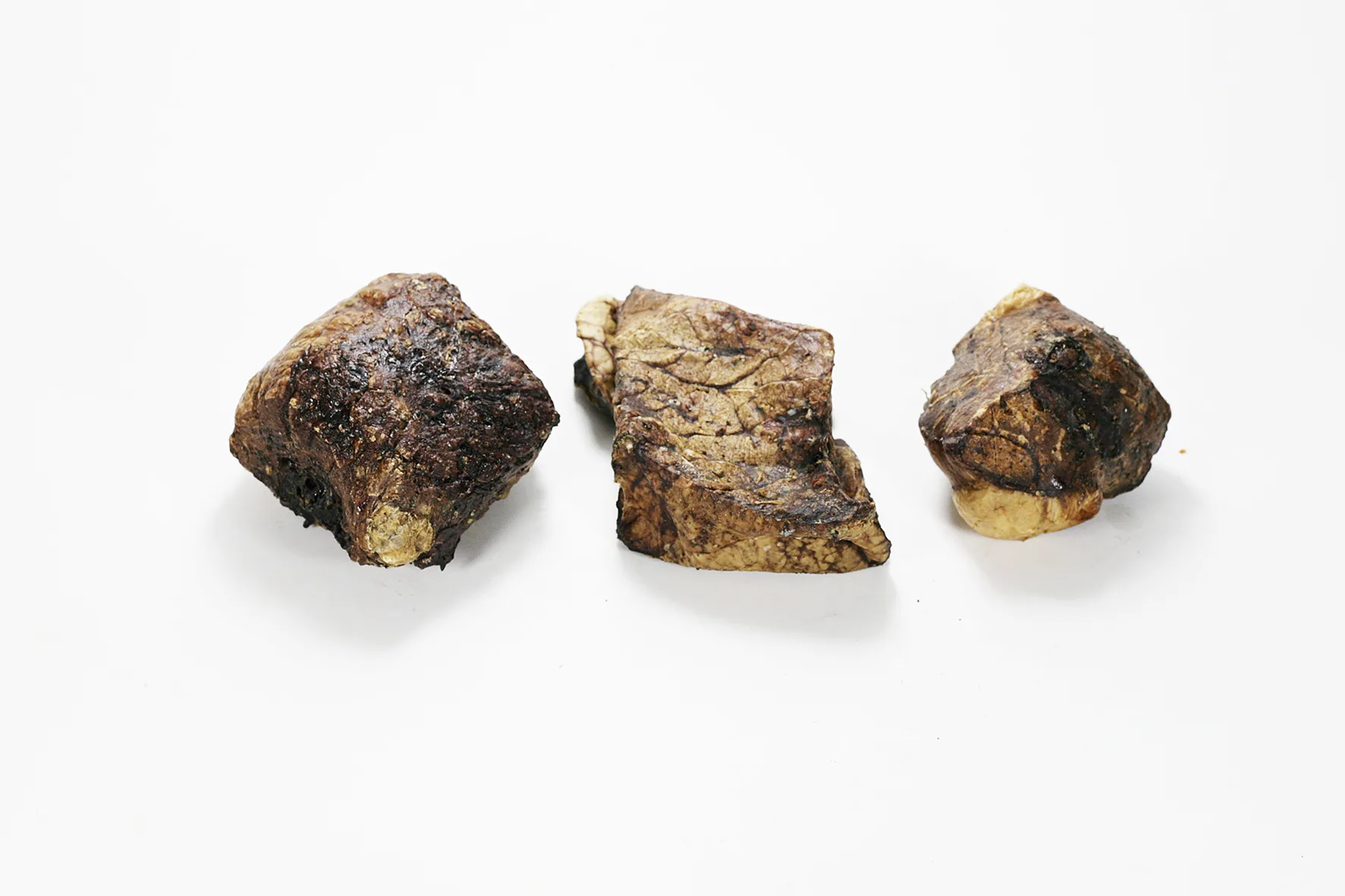
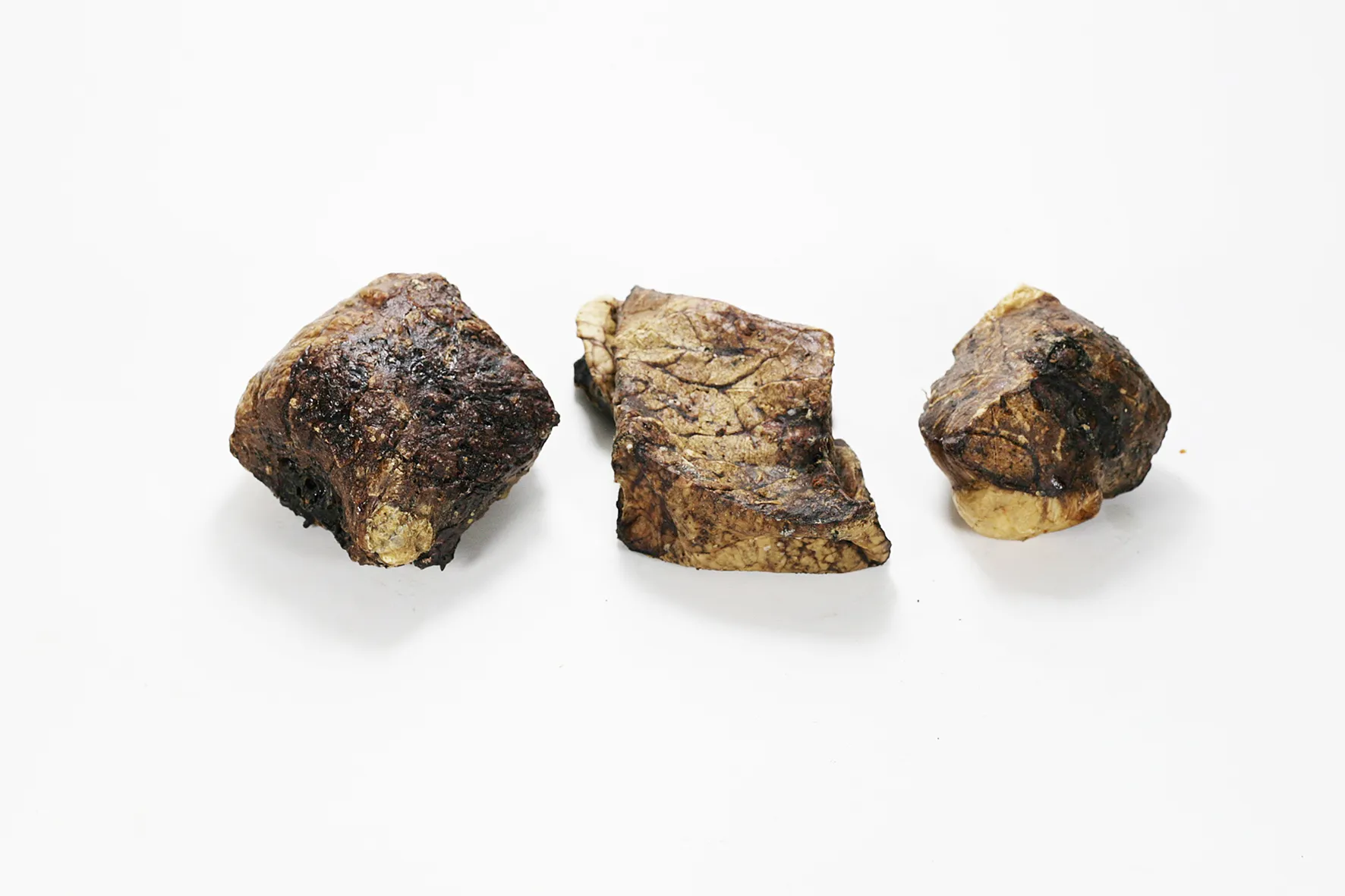 Beef lung
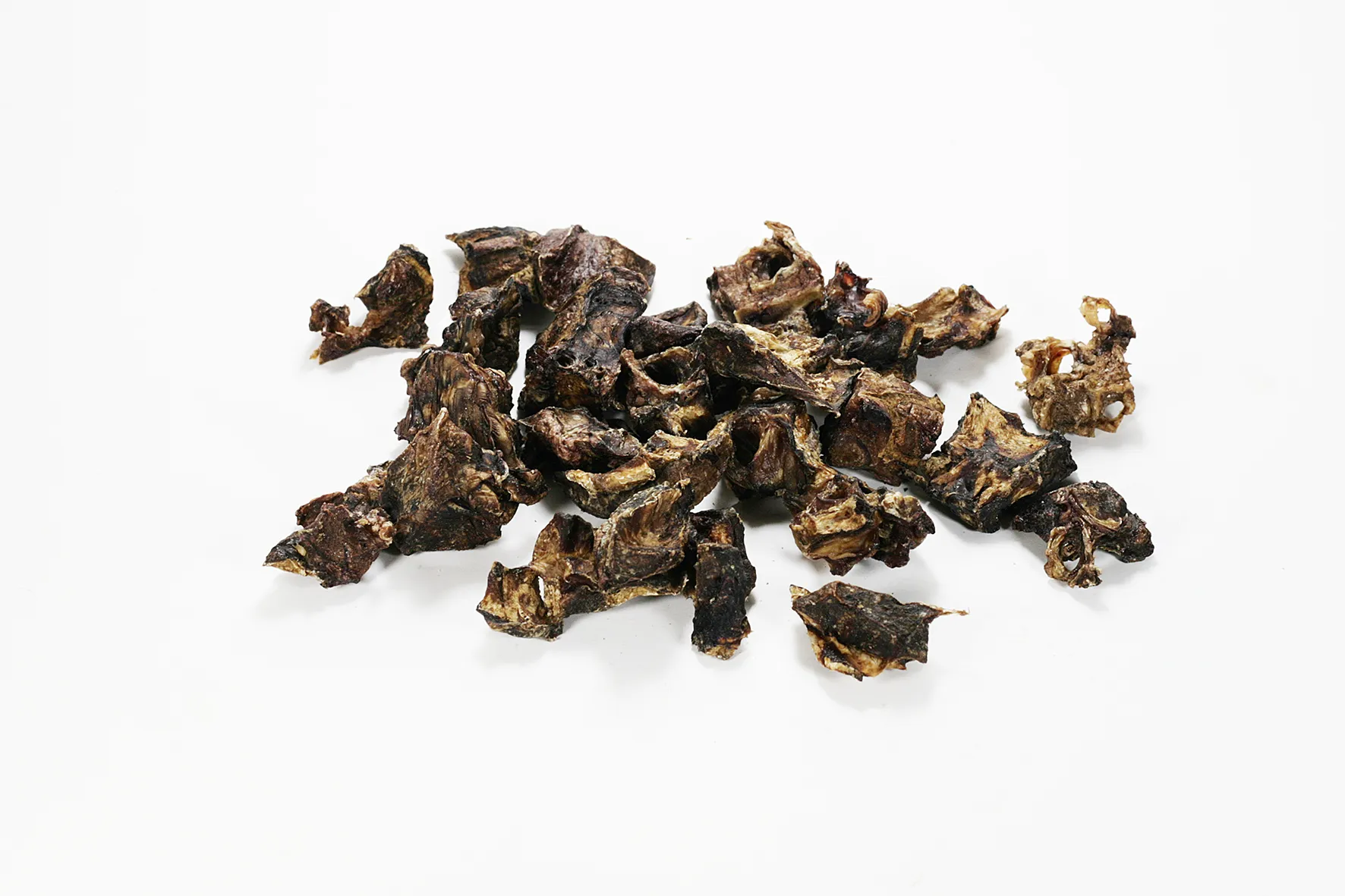 Beef lung cubes
The same animal ingredient in two formats: irregular beef lung pieces and pre-cut lung cubes.
Think about when you want to offer the treat. A larger piece that your dog handles calmly may suit a chewing break. For training or walks, smaller pieces that are easy to portion are more practical.
Beef lung cubes are already cut into small pieces. Beef lung can be portioned depending on the piece. Ears, skin and beef pizzle are more often offered as individual chews.
If you are looking at poultry, compare the shape of chicken feet and chicken necks. Both are whole dried pieces, not tiny training treats.
You can also read the composition and analytical values for duck necks for dogs and chicken wings for dogs. These two products are not currently listed in the online shop. Choose from the available poultry products in the shop when buying.
Match the size to your dog’s chewing habits
Consider your dog’s size, bite strength and experience. A small piece may be swallowed quickly by a large, hurried dog. A very firm chew is not automatically a good match for a cautious or older dog.
When trying a new form, watch how your dog handles it:
- Does your dog chew calmly or try to swallow the piece whole?
- Can they hold it comfortably?
- Are small remaining pieces forming that you should take away?
- Does the firmness suit the way your dog usually chews?
Natural pieces can vary in shape, colour and thickness. Check each piece, even when your dog knows the product.
Compare ears, skin and beef pizzle
Ears
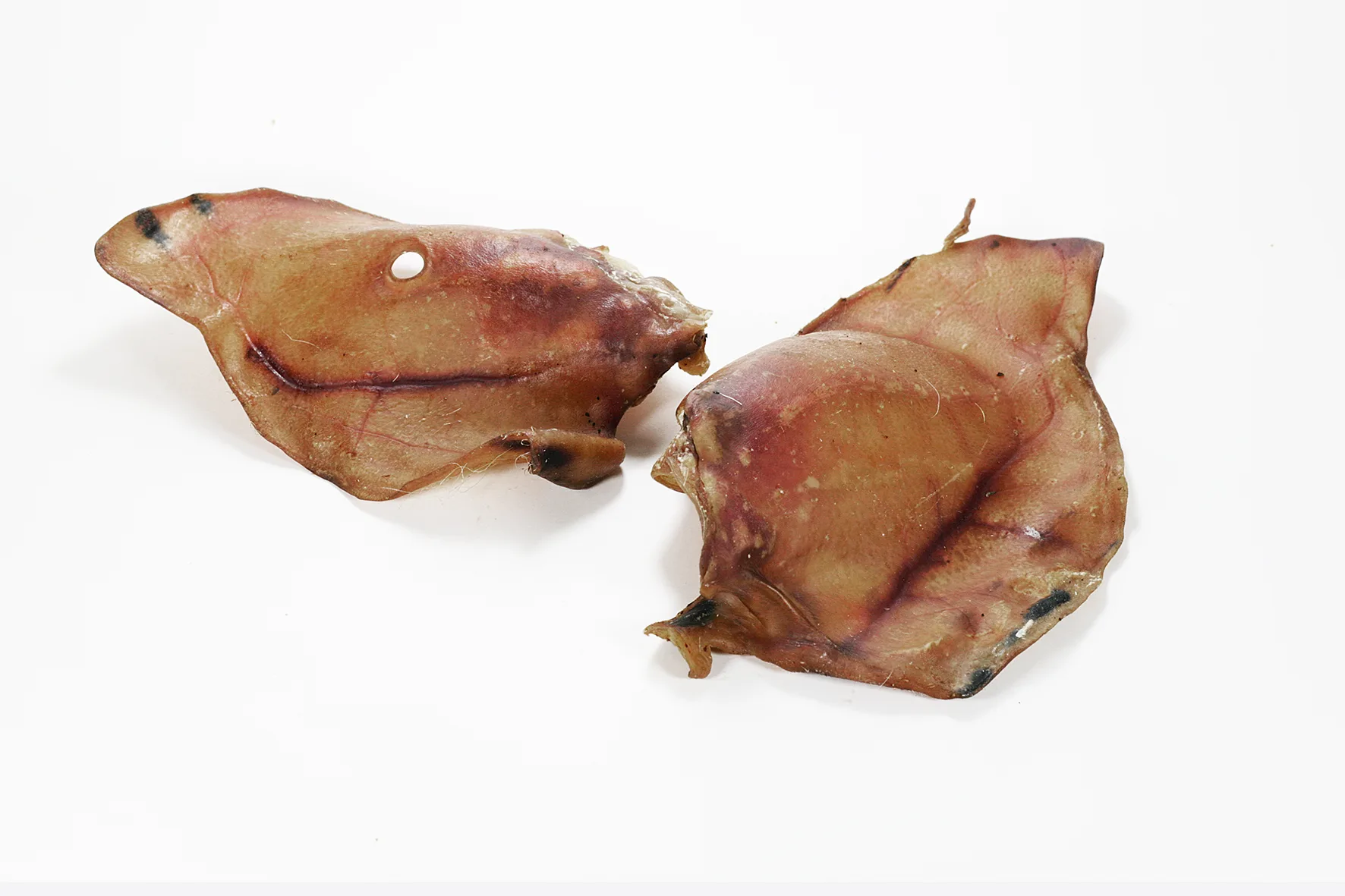
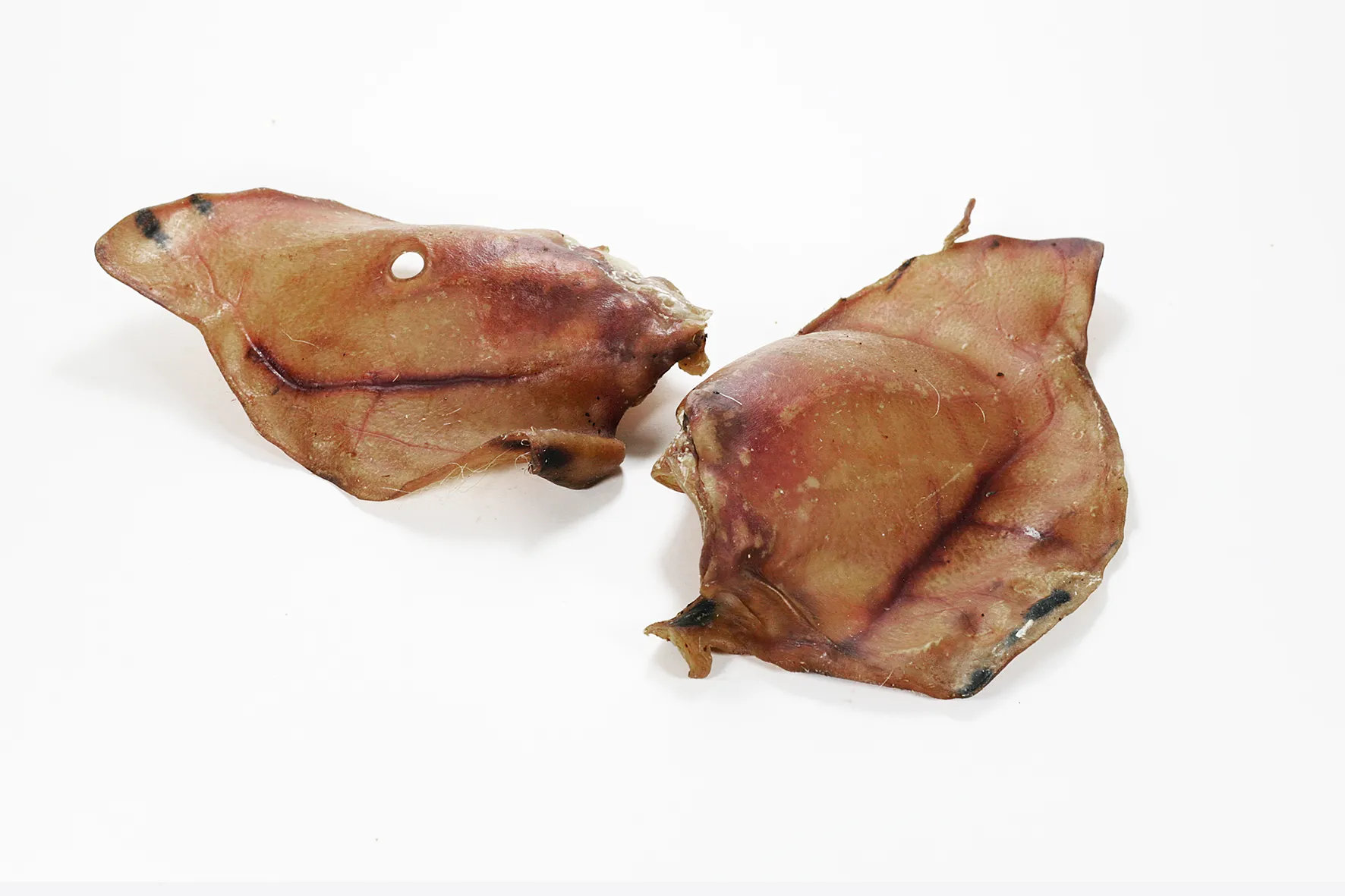 Pig ears
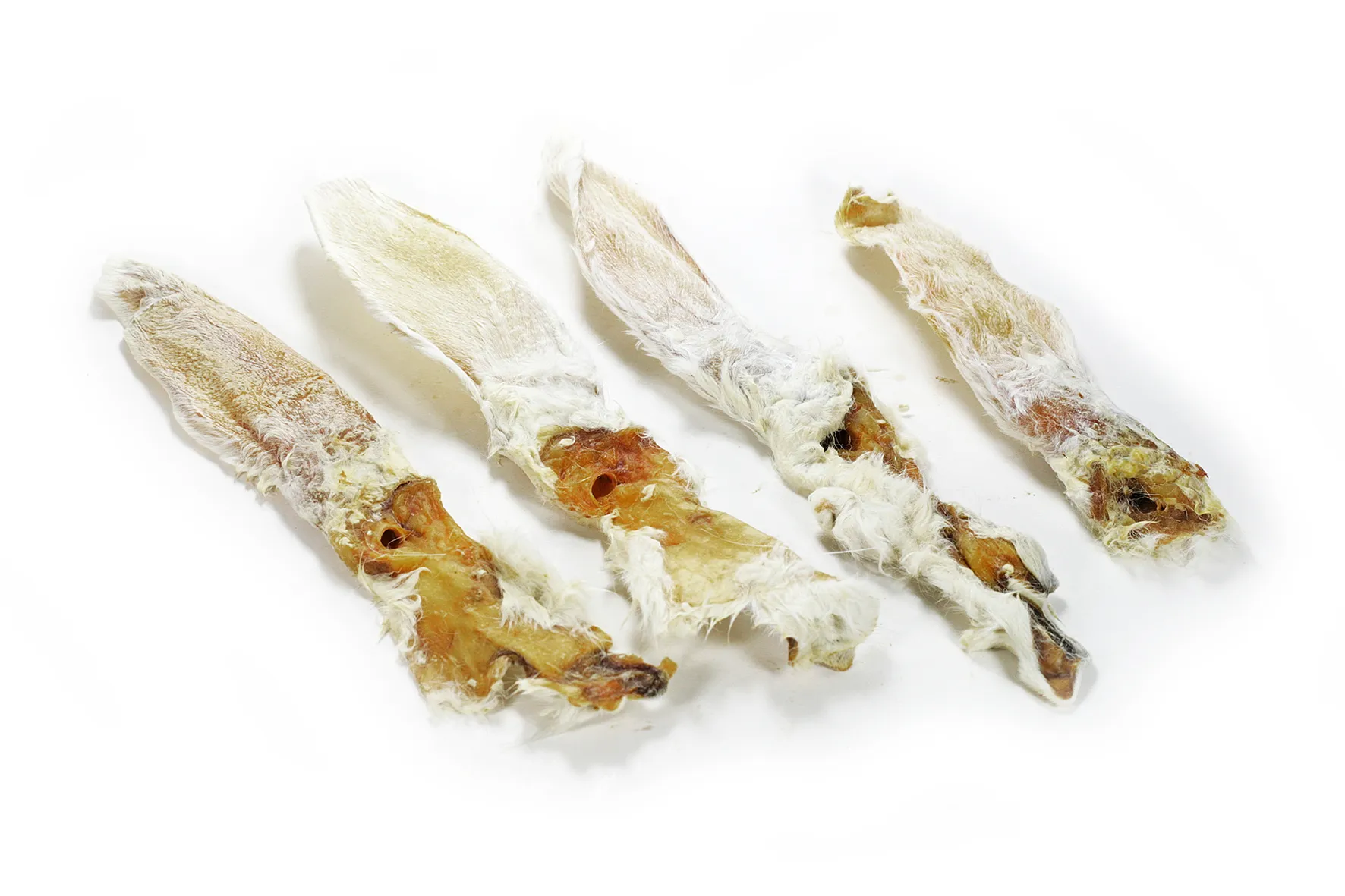 Rabbit ears with fur
The photos show shape and surface, not a comparison to scale. Check each product’s stated piece details.
Pig ears and rabbit ears with fur differ in size and structure. Pig ears are larger and thicker. Rabbit ears are narrower and lighter.
If you are unsure about the furry version, read our guide to rabbit ears with fur: size, tolerance and feeding.
The animal ingredient matters too. A pig ear consists of pig ear; a beef ear without fur consists of beef ear. We also offer beef ears with fur. Compare the stated composition and piece size for each product. The animal alone cannot tell you how long your dog will chew.
Dried skin
Beef skin without fur comes in longer pieces. Compare the format with your dog’s size, but remember that thickness and shape can differ within a pack.
Flat pork skin, about 15 cm offers a different animal ingredient and a flat, long piece format. If you are choosing between skin and ears, compare the actual shape and declared composition. A different animal ingredient does not guarantee better tolerance.
Beef pizzle
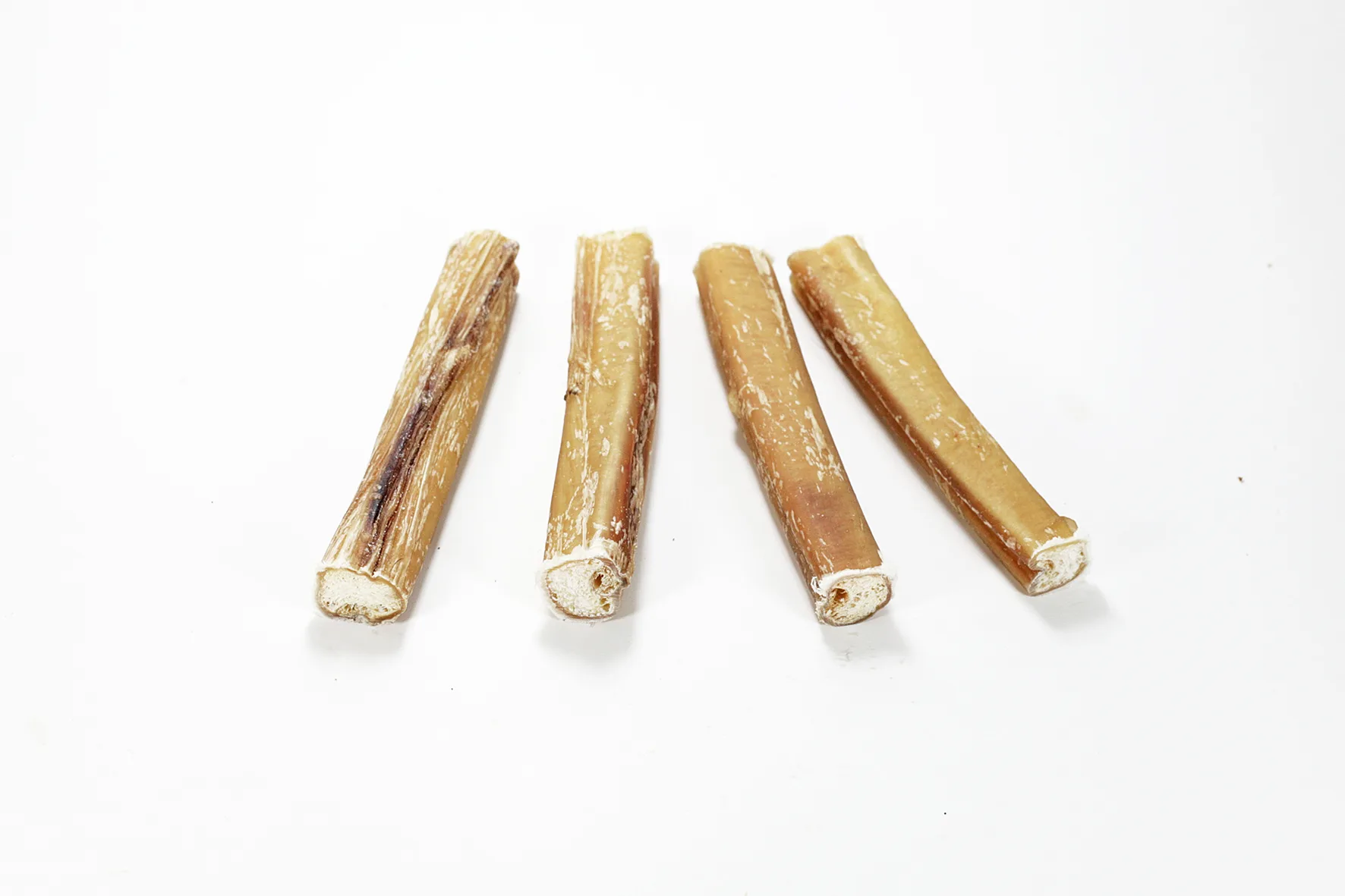
Our beef pizzle of about 12 cm has a stated piece format. Still check each piece and supervise chewing.
Read when a bully stick may not suit your dog for more on piece size, gulping and the daily treat allowance.
Longer-lasting chews or a quick reward?
For a longer chewing break, start with firmness and piece size. Dried skin and beef pizzle are generally firmer than loose lung. There’s no guaranteed chewing time. Bigger or harder isn’t automatically a better fit either.
Compare horse skin with beef skin if the animal ingredient matters to you. Beef lung or pre-cut lung cubes offer a different format for small rewards. Choose for your dog, not for a promised number of minutes.
Read the ingredients and analytical values
The composition tells you which animal ingredient is used. For our classic chews, the named animal component is the ingredient. The product page also lists moisture, fat, protein, ash and crude fibre.
We want “natural” to be something you can check. The declared ingredient appears on each product, such as 100% beef lung or 100% chicken foot. Our chews are dried. The batch and best-before date are printed on the pack, so we can trace the goods. Read how we document origin and batches.
These facts help you compare products. They cannot predict exactly how long your dog will chew or which product they will tolerate best. Introduce new treats gradually and include them in the daily food allowance.
Separate a chewing break from dental care
A firm natural piece does not establish a benefit against tartar. Our guide to dog chews and dental care explains how to assess dental claims alongside piece size and firmness.
Stay nearby while your dog chews
Supervise chewing and provide fresh water. Remove remaining pieces that have become too small. If your dog has known intolerances, dental problems or a veterinary feeding plan, discuss the choice with your vet first.
You can compare forms and ingredients in our dog chew range. The shop shows current packs, final prices and availability.
A young dog raises a few more questions. Our guide to puppy chews: choosing for size, firmness and teething covers age information and the product details to check before buying a first chew.
Sources and editorial responsibility

Product details and photos come from the Kaumaster range. The linked product pages list the declared composition, analytical values and available packs.
General guidance on treat allowance, supervision and suitable piece size: WSAVA: Feeding treats to your dog (PDF). This is general feeding guidance, not veterinary approval of an individual product.