
Hard chews for dogs: understand the hardness scale
A high hardness rating is not a quality score. Compare firm natural pieces without turning a texture description into a recommendation for every dog.

A hard chew for dogs can come with several expectations: a longer activity, something for a strong chewer, perhaps even dental benefits. These are separate questions. A useful comparison keeps them separate.
This guide focuses on the texture and shape of firm natural pieces. See planning a chewing break for the activity itself, and our dental-care guide for that different question.
What levels four and five mean here
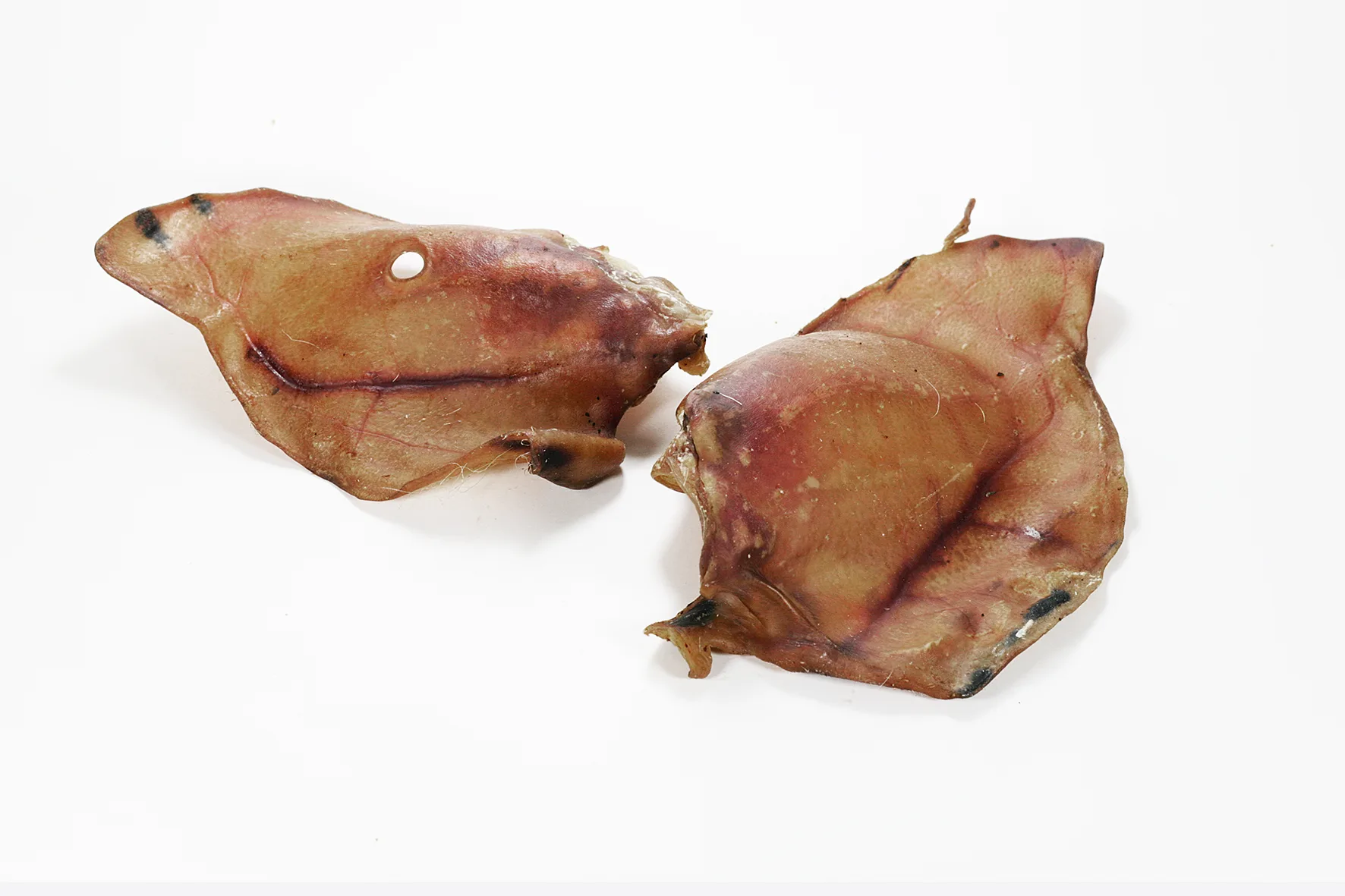
Our internal scale runs from one to five. Four means hard; five means very hard. Beef ears and pig ears are listed at four. Skin formats, pork rind and bully sticks are listed at five.
This supports comparison within our range. It is neither a standardised measurement nor a veterinary safety test. The dimensions, thickness and divisibility of the individual piece still matter. A higher number is not evidence that you have found a better product for your dog.
The same rating can cover different shapes
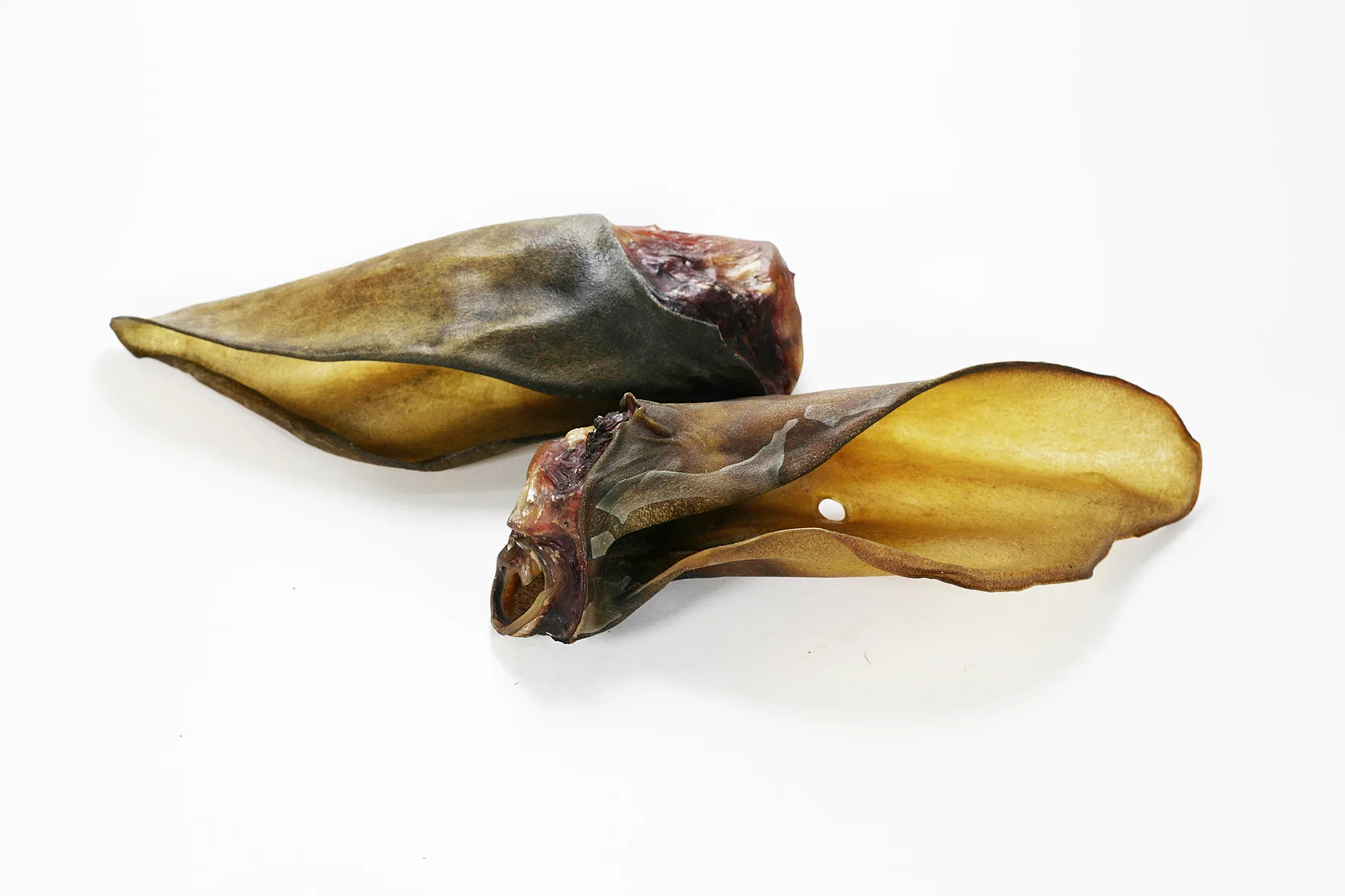
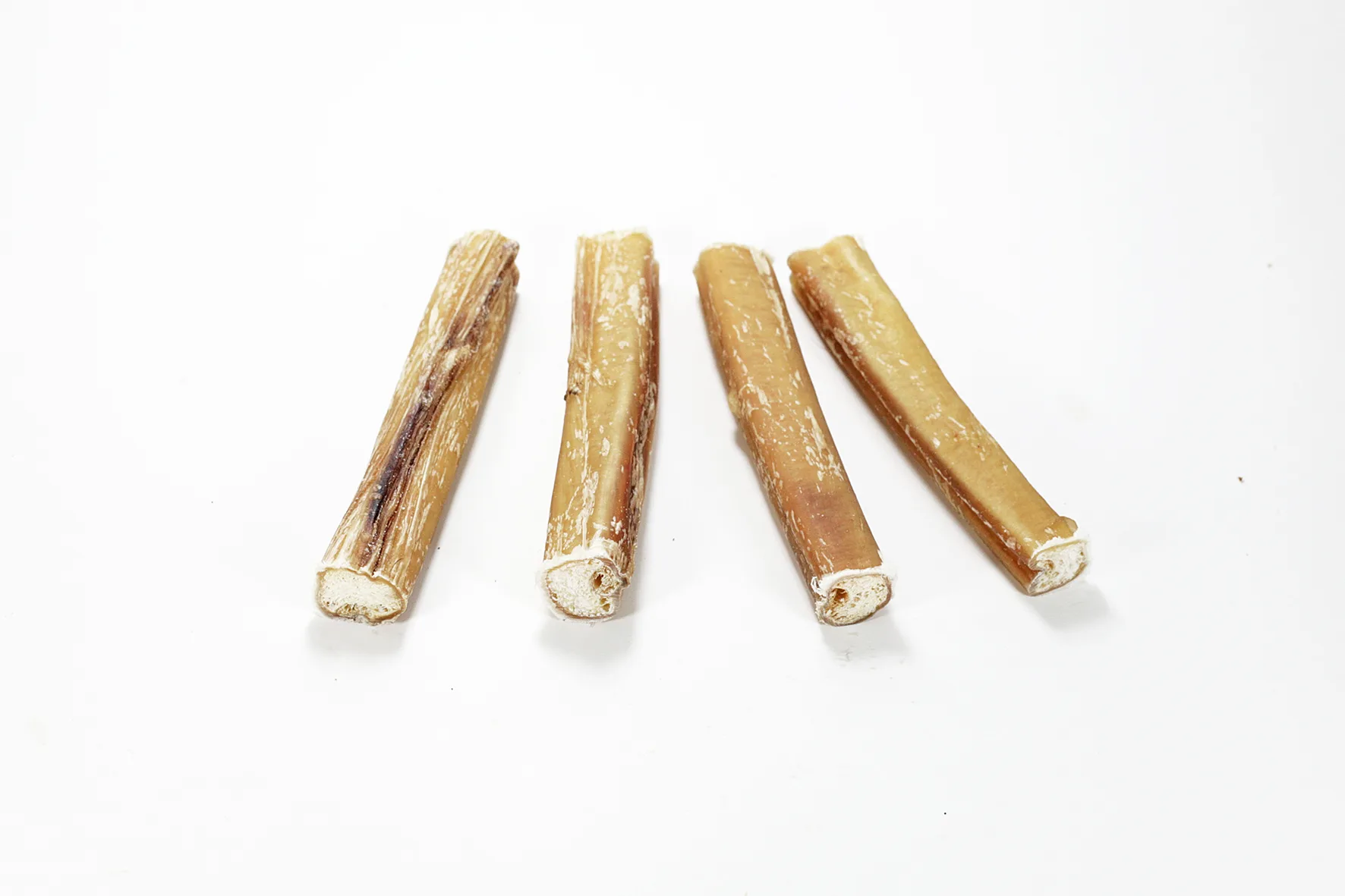
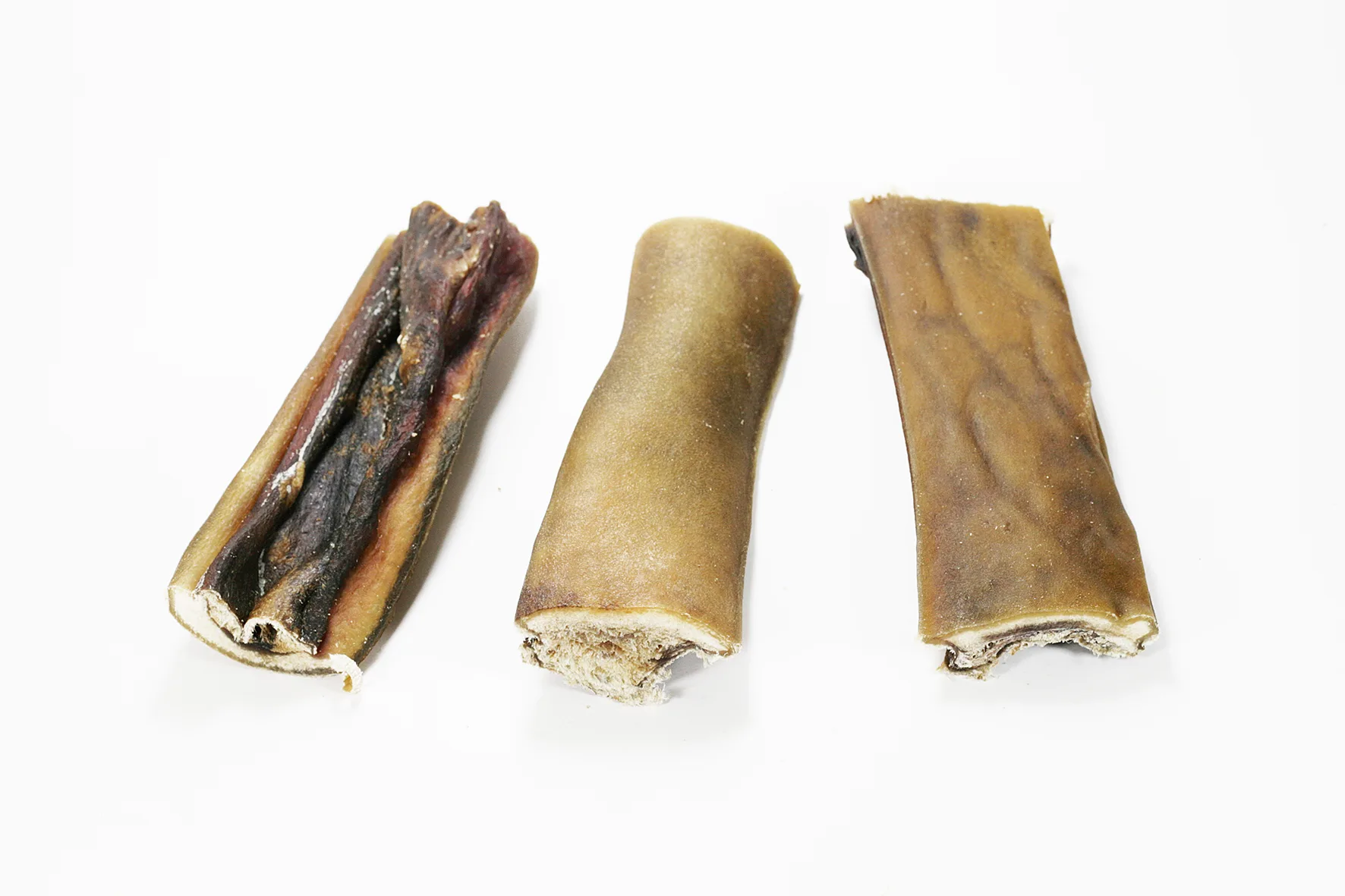
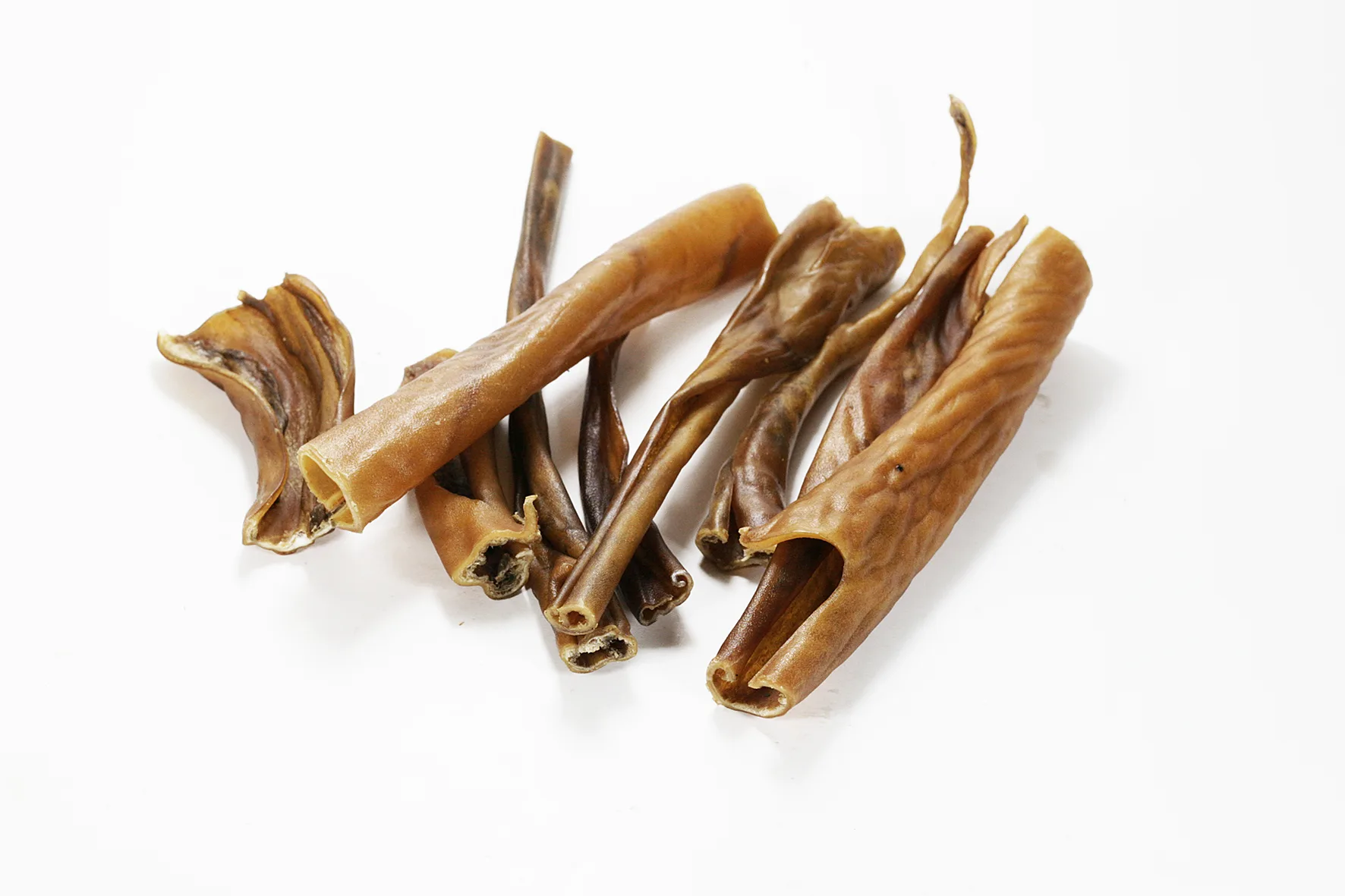
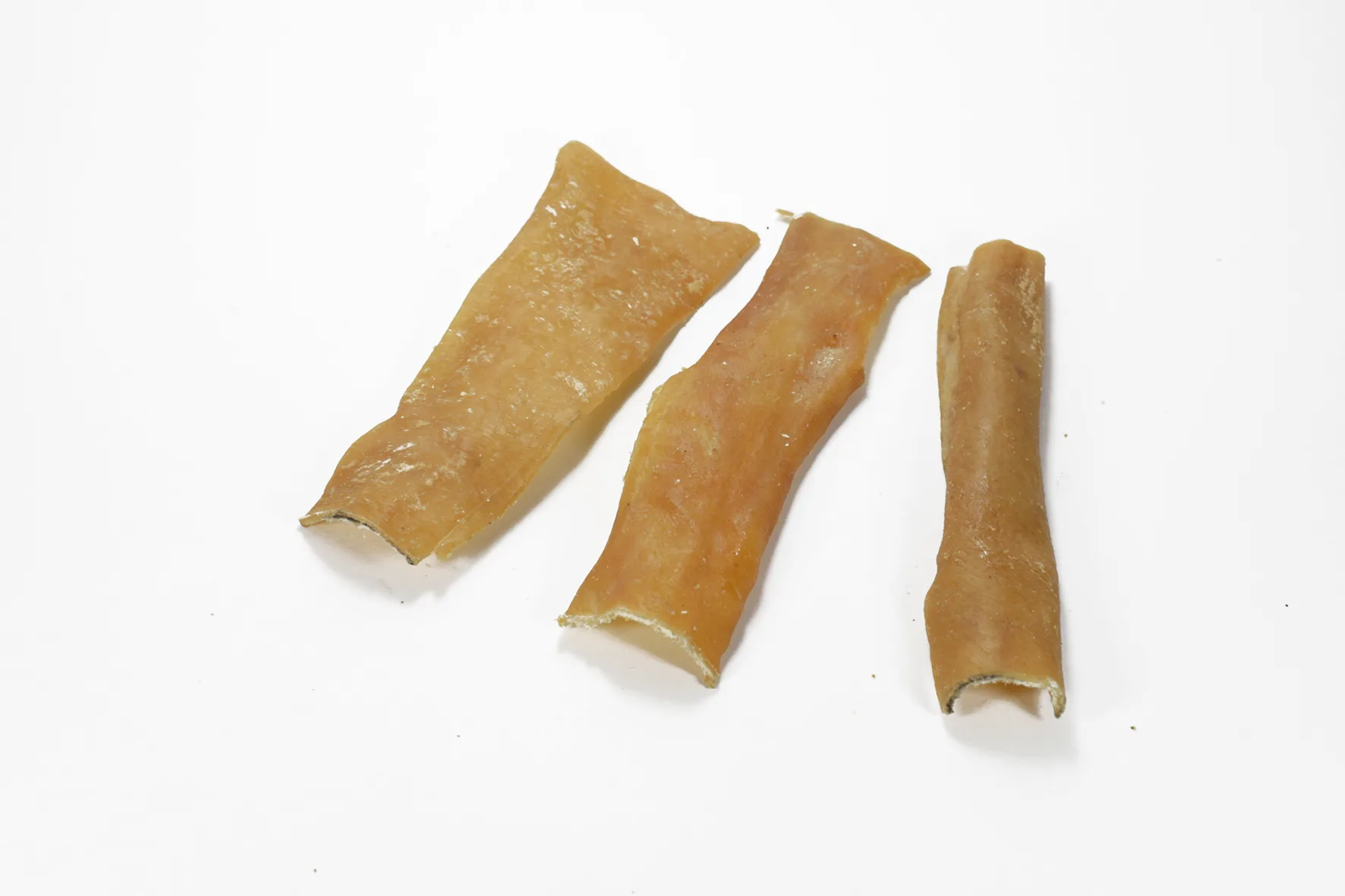
A beef ear has a broad, irregular outline. Skin is another tissue, offered as longer or flatter natural pieces. A bully stick has a different shape again. Two products with the same rating can be handled differently when a dog picks them up and works on them.
Compare the stated measurements too. Our beef skin without fur is described as approximately fifteen centimetres long; our bully sticks as approximately twelve centimetres. These are approximate natural-piece dimensions, not exact measurements of every piece or a dog-size recommendation.
Include your dog’s dental situation
VCA describes very hard objects as one possible cause of fractured teeth. This does not provide an individual assessment of our products. It does explain why a dog biting strongly is not a sufficient selection criterion on its own. VCA: Fractured teeth in dogs.
If chewing behaviour changes or you have questions about your dog’s teeth, ask your veterinary practice before choosing another firm piece. A different filter rating cannot replace that assessment. Nor does the word natural make a hard object automatically appropriate.
Separate ingredient, fur and firmness
Beef, pork and horse identify the animal ingredient. Loose lung and firm skin can both come from beef. Once you have selected an ingredient, you still need to consider the format.
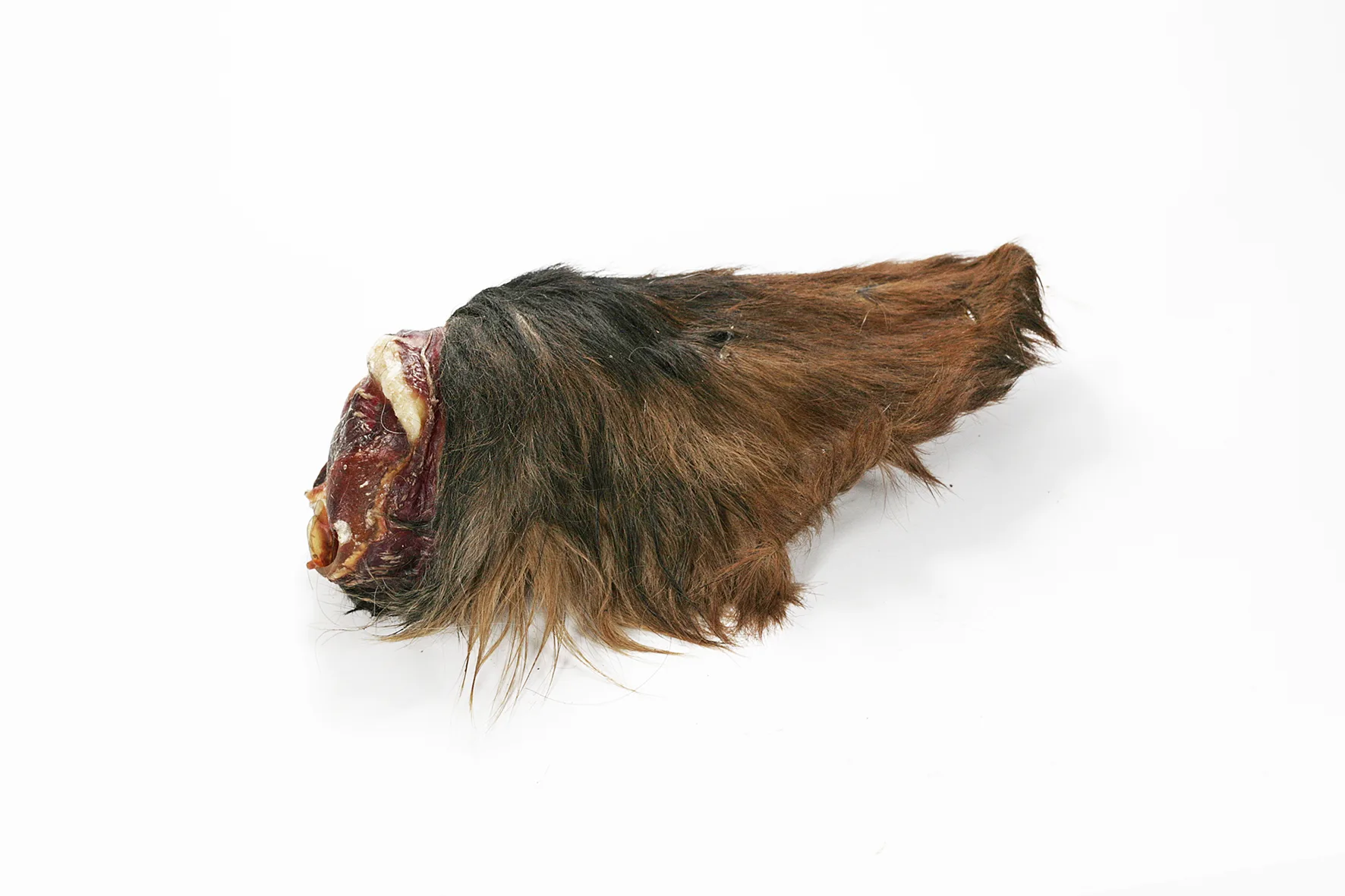
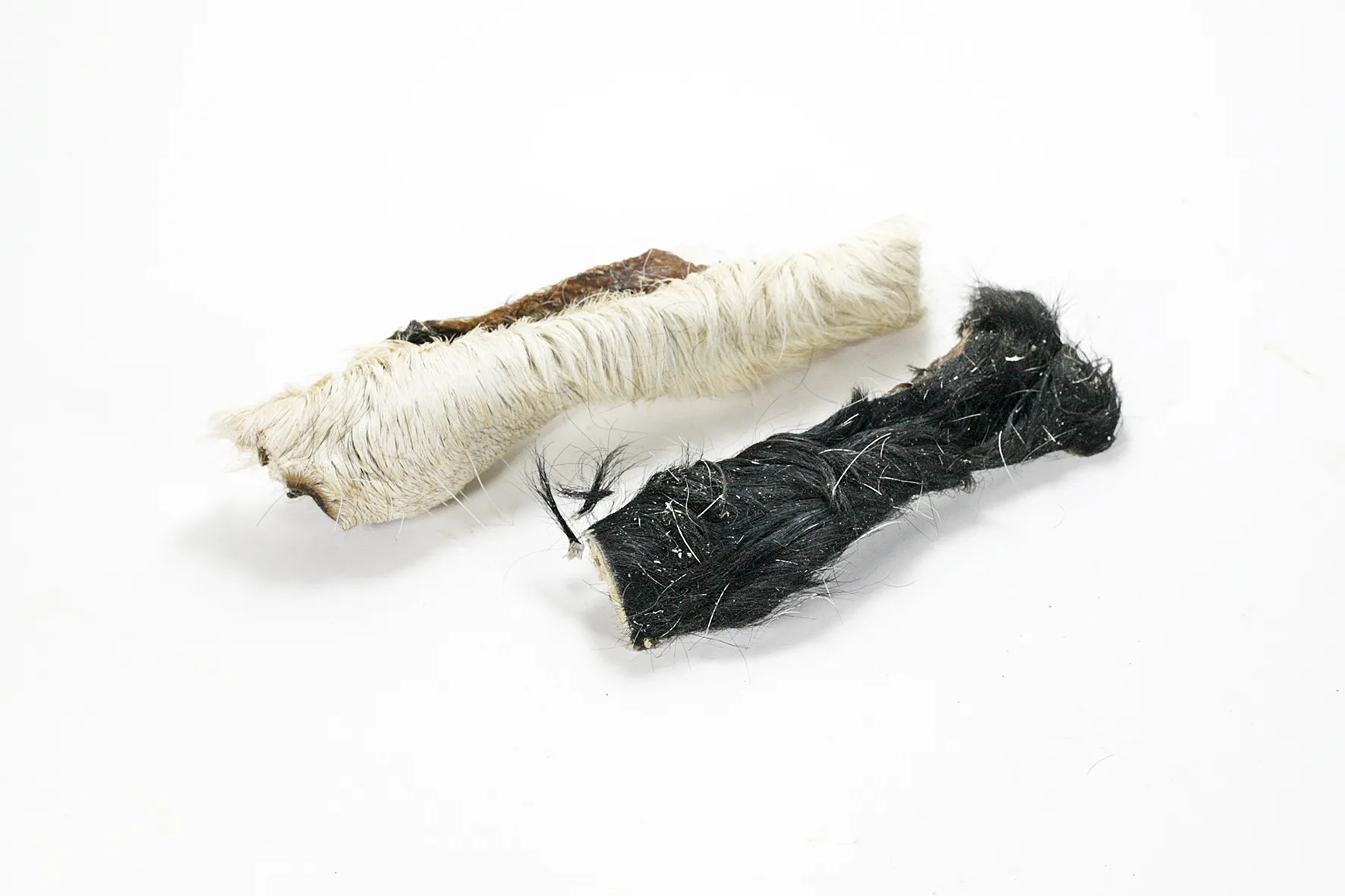
Fur is another characteristic. Our beef ears with fur and beef skin with fur have different hardness ratings. The fur-chew comparison puts those formats side by side. Fur alone does not explain the firmness.
Turn a broad search into a concrete choice
Record which format your dog has previously handled calmly, including ingredient, approximate dimensions and behaviour during supervision. Compare those observations with the product information. That is more useful than simply shopping for the hardest option.
Below are the products currently assigned to levels four and five. Read divisibility and feeding instructions before buying. For a looser texture, see our softer-chew comparison.
The formats side by side
On a small screen, swipe the table sideways to compare all columns.
| Format and ingredient | Size class | Chew hardness | Breakability |
|---|---|---|---|
| Beef ears without hair100% beef earWhole ear, without hair | Medium, 11 to 20 cm | Hard4 of 5 | Difficult to break |
| Beef skin without hair, approx. 15 cm100% beef skinWithout hair, approx. 15 cm | Medium, 11 to 20 cm | Very hard5 of 5 | Difficult to break |
| Beef pizzle, approx. 12 cm100% beef pizzlePieces, approx. 12 cm | Medium, 11 to 20 cm | Very hard5 of 5 | Difficult to break |
Source: the linked shop product pages. Hardness is our internal comparison scale, not a standardised dental test. Size classes describe the product, not the size of dog. Natural pieces vary.
For your choice: Staying with beef lets you compare ear, skin and bully stick without changing the animal ingredient at the same time. The ear is classed as four, the other two as five. Choose by the shape and your dog’s previous chewing behaviour, not the highest hardness number.
Sources and editorial responsibility

Product details and product photos come from the Kaumaster range. The linked product pages list the declared composition, analytical values and available packs.
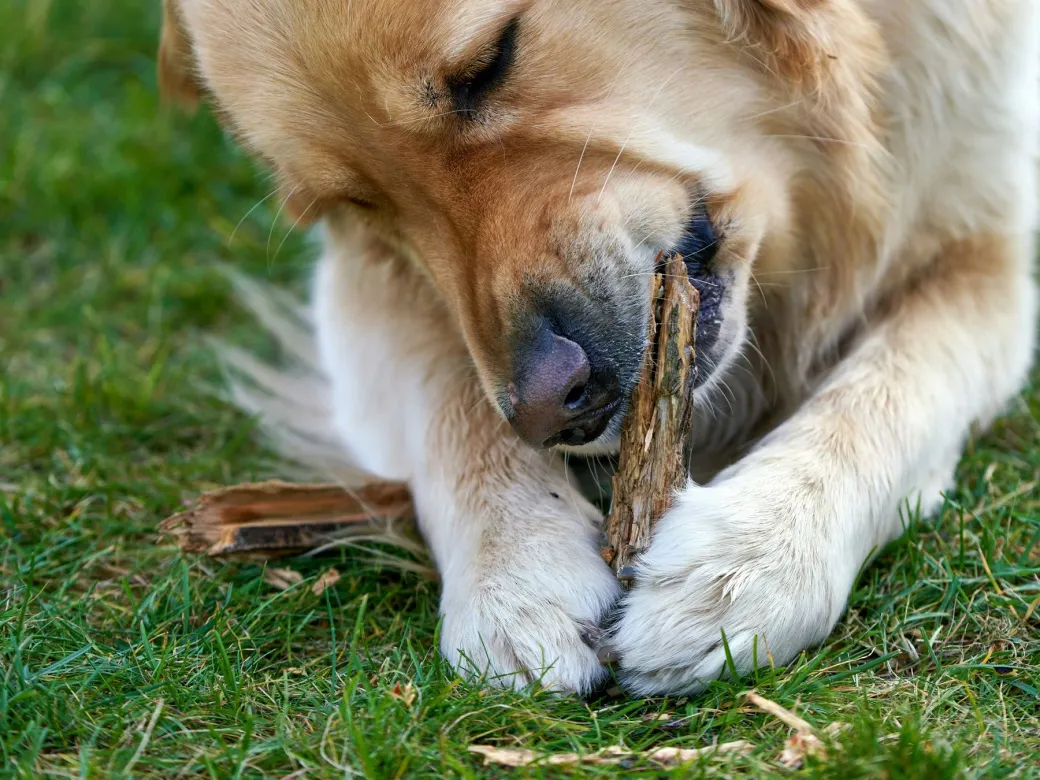
The supplied lifestyle photograph shows a dog with a piece of wood. It does not show a shop product and is not a recommendation to use wood as a dog chew.
General guidance on treat allowance, supervision and suitable piece size: WSAVA: Feeding treats to your dog (PDF). This is general feeding guidance, not veterinary approval of an individual product.