

Scent games for dogs: 4 easy indoor ideas
A few visible pieces of food are enough to begin. Four search games with simple steps, easier starting points and a note template for your next session.

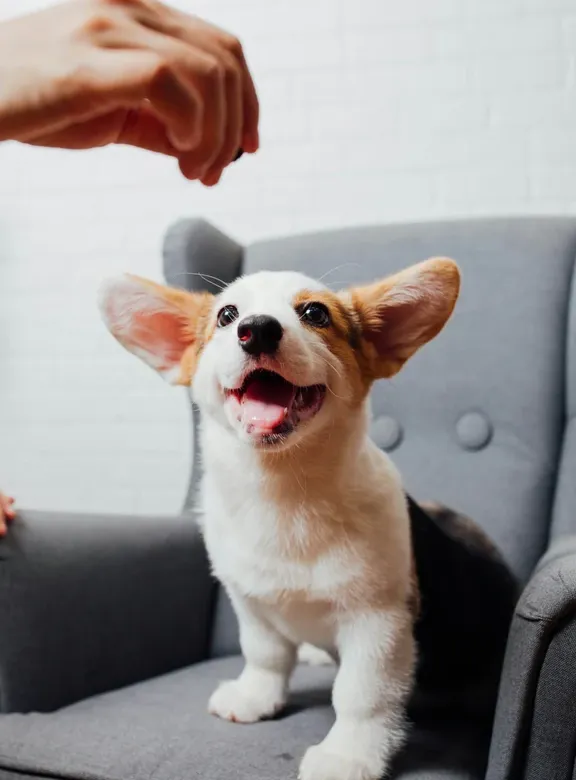
Your dog doesn’t need a trained cue or a whole house to search for a first scent game. Begin with something easy to reach and find. Part of their usual food or a familiar toy will do.
Choose one of the four indoor search games below. The instructions draw on the welfare organisations and dog-sport association linked in the sources. The easier starting points and note template help you adapt the activity to your dog.
Set up before you start
Pick a quiet place with secure footing. Remove things your dog could knock over or pick up while searching. Have the food and materials ready first. RSPCA recommends a place with few distractions and short sessions when teaching something new. RSPCA: starting training.
Set aside the food for a food-based game. A portion of your dog’s usual daily ration lets you begin without introducing a new treat. If your dog has a prescribed diet or activity restrictions, work within that existing plan.
Which game should you try first?
| Game | What you need | Easy beginning |
|---|---|---|
| Visible food search | Suitable food pieces | A small clear area, everything within reach |
| Open box search | Clean, shallow boxes | Food in an open box |
| Loose towel fold | An intact towel and food | One loose, partly open fold |
| Find a familiar toy | A suitable toy your dog knows | Partly visible in an easy place |
The order isn’t a test. If your dog chews or tries to swallow a material, choose a game without it. You don’t have to work through all four.
Four scent games to try indoors
1. Find food on a small clear area
This starting point follows Battersea’s scatter-feeding advice.
- Spread a few suitable pieces over a clean area you can see clearly. Let your dog watch.
- Stay nearby while they find and eat the pieces at their own pace.
- If a piece is missed, make it easier to find before adding more hiding places.
You can expand the area later. Add concealed pieces once the simple version works. Battersea: food searches and help when needed (PDF).
2. Search open boxes
ASPCA describes a food search among boxes. Work with one dog at a time.
- Use clean, open boxes without staples or loose packaging. Keep the sides low enough for an easy find.
- Put food in one box. For an easier beginning, let your dog see where it goes.
- After a find, change that box’s position. Add another empty box later.
The task is to find food. Stop this version if your dog tries to eat the cardboard. ASPCApro: box searches.
3. Investigate a loose towel fold
DVG includes food in folded fabric among its indoor ideas. Keep the first attempt open:
- Lay out an intact towel and place suitable food pieces on it.
- Fold one corner loosely over some of the food, leaving a find visible.
- Let your dog investigate. Open the fold a little if they get stuck.
Change only the fold at first. A tight knot isn’t part of this beginner version. Put the towel away if your dog chews fabric or pulls out threads. DVG: indoor activities (PDF).
4. Find a favourite toy
A search game doesn’t have to involve food. Dogs Trust also suggests hiding a favourite toy.
- Choose an intact, suitable toy your dog enjoys.
- Leave it partly visible somewhere easy to reach. Let your dog watch where you put it.
- When they find it, play together if that’s what they enjoy. Retrieving isn’t required for this starting version.
Move the toy a little next time. Avoid places that would require climbing or moving furniture. Dogs Trust: enrichment ideas.
If your dog stops searching or gets frustrated
Check the task first. Is the find within reach? Is it still in the same room? Did you change both the hiding place and the material? Return to the last easy step. Repeating a search cue won’t make an overlooked find easier.
Consider the reward too. Some dogs prefer a game; others enjoy finding food. PDSA recommends choosing something the individual dog values, keeping sessions short and finishing after a success. PDSA: reward-based training.
If your dog works on the material instead of searching, walks away or clearly doesn’t want to continue, put the equipment away and pause. A harder hiding place won’t help at that point. Qualified training support can help with recurring problems.
How long and how often?
Start briefly and watch whether your dog wants to take part. There isn’t a required duration or daily quota for these four games here. A few easy finds can be enough before another session later.
A successful search doesn’t cover every daily need. Continue to plan outings and exercise around your dog. Our walking guide separates toilet opportunities from longer walks.
A short note helps next time: which game, what help was needed, and what will you keep or make easier? Download our search-game notes and fill them in privately. The website doesn’t collect your entries.
Choosing rewards for a food search
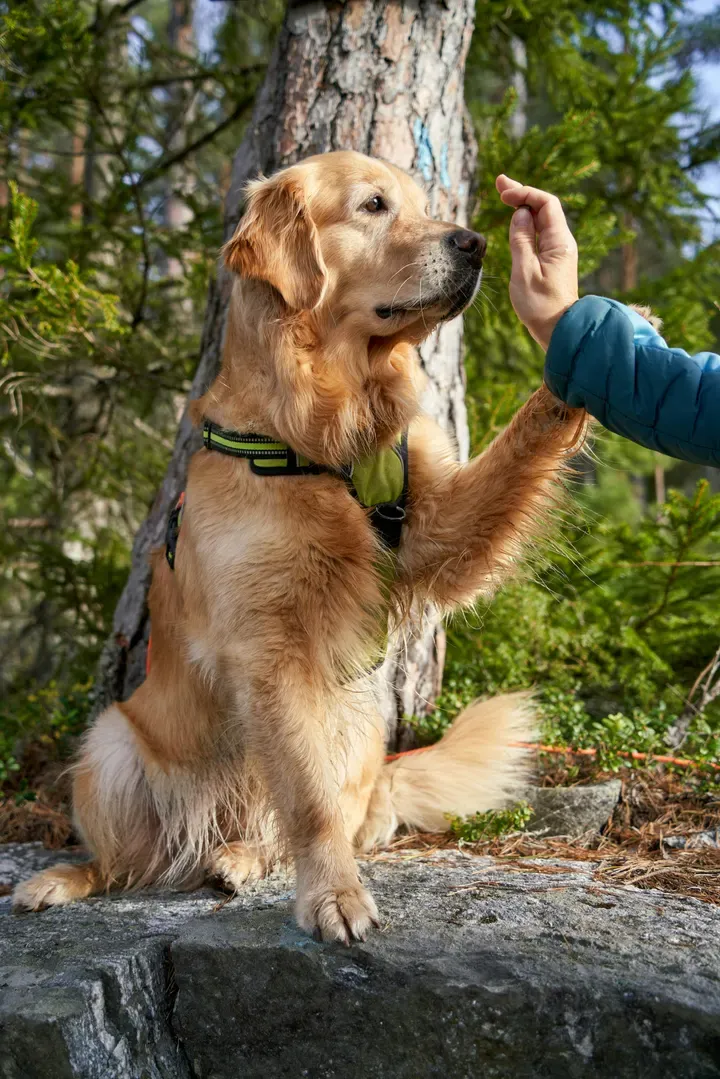
Suitable pieces of the usual food are one starting point. Account for extra treats separately: WSAVA recommends keeping all extras below 10% of daily calories. A gram allowance needs confirmed energy figures. We don’t hold those manufacturer figures for our chews, so we give no fixed treat ration. WSAVA: planning treats (PDF).
If you want to compare additional dried rewards, our training-treat guide explains lung cubes, larger beef lung pieces and lamb lung. Check the individual product’s size, divisibility and composition. A whole chew for a supervised break serves a different purpose from repeated small search rewards.
Sources and editorial responsibility

This everyday-life guide was prepared from the original welfare and veterinary sources linked below. Redas Klerauskas is the editor, not the treating veterinarian. The planning aids help you organise care; they do not diagnose illness.
- Battersea: Brain games for dogs (PDF)
- ASPCApro: Scent Games for Canine Enrichment
- Deutscher Verband der Gebrauchshundsportvereine (DVG): Indoor activity ideas, Hundesport 2/2025 (PDF)
- Dogs Trust: Enrichment activities for dogs
- RSPCA: How to train your dog
- PDSA: Reward-based training for dogs
- World Small Animal Veterinary Association (WSAVA): Feeding treats to your dog (PDF)