
Chews for small dogs: compare size and shape
A small bag does not tell you the size of the pieces. A small piece is not automatically suitable for every small dog either. Here is how to compare formats.


When choosing chews for small dogs, the actual piece tells you more than a small-dog label. Pack weight, product length and your dog’s body size are three different details. Each answers a different question.
A small bag can contain larger natural pieces. A piece up to five centimetres long can also have a very different shape from a cube of similar length. Compare shape and firmness alongside the dimensions.
What mini and small mean in our shop
Our size classes refer to products. Mini means up to five centimetres; small means six to ten centimetres. They do not specify a dog’s weight group or an approved feeding age.
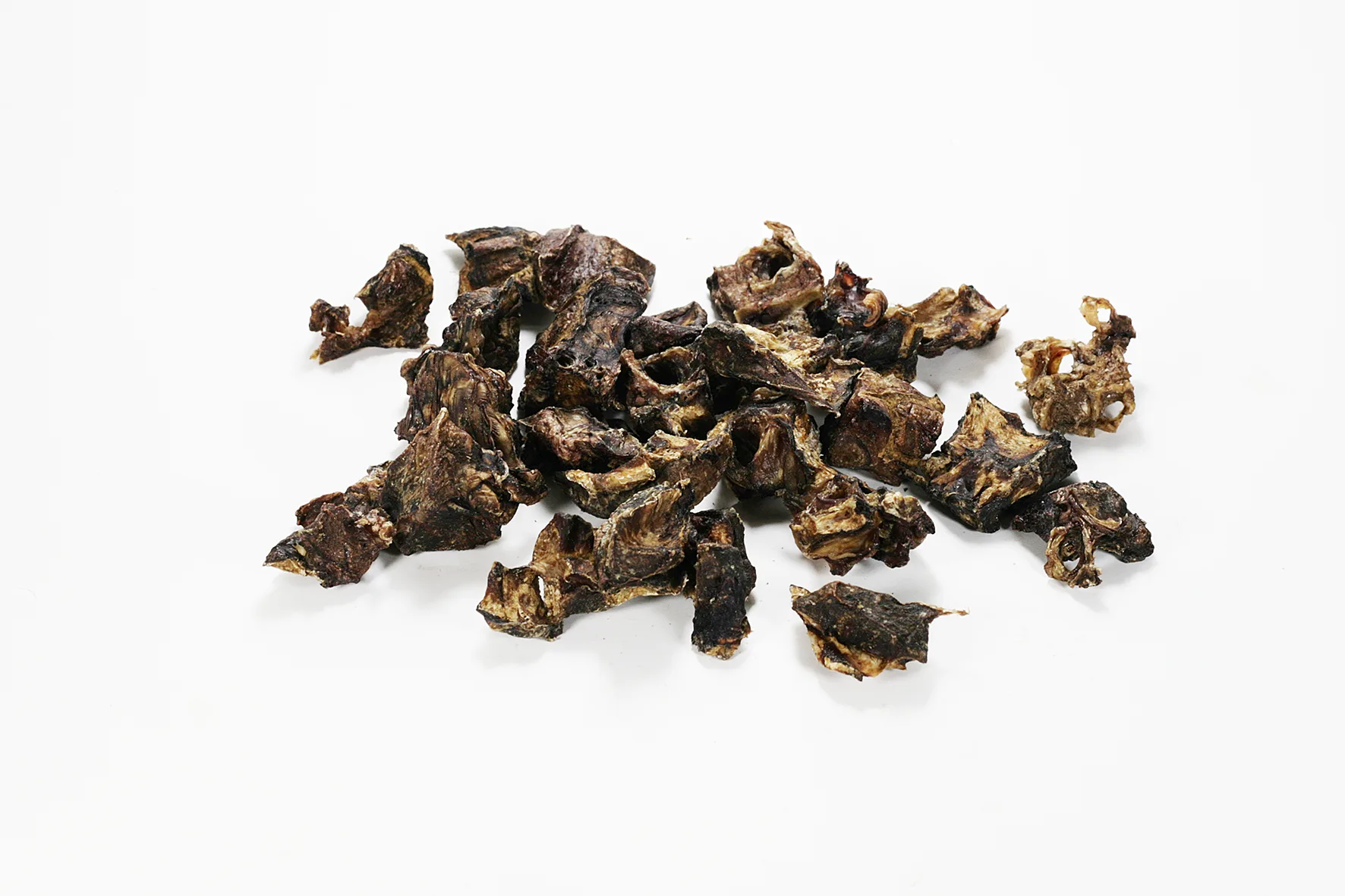
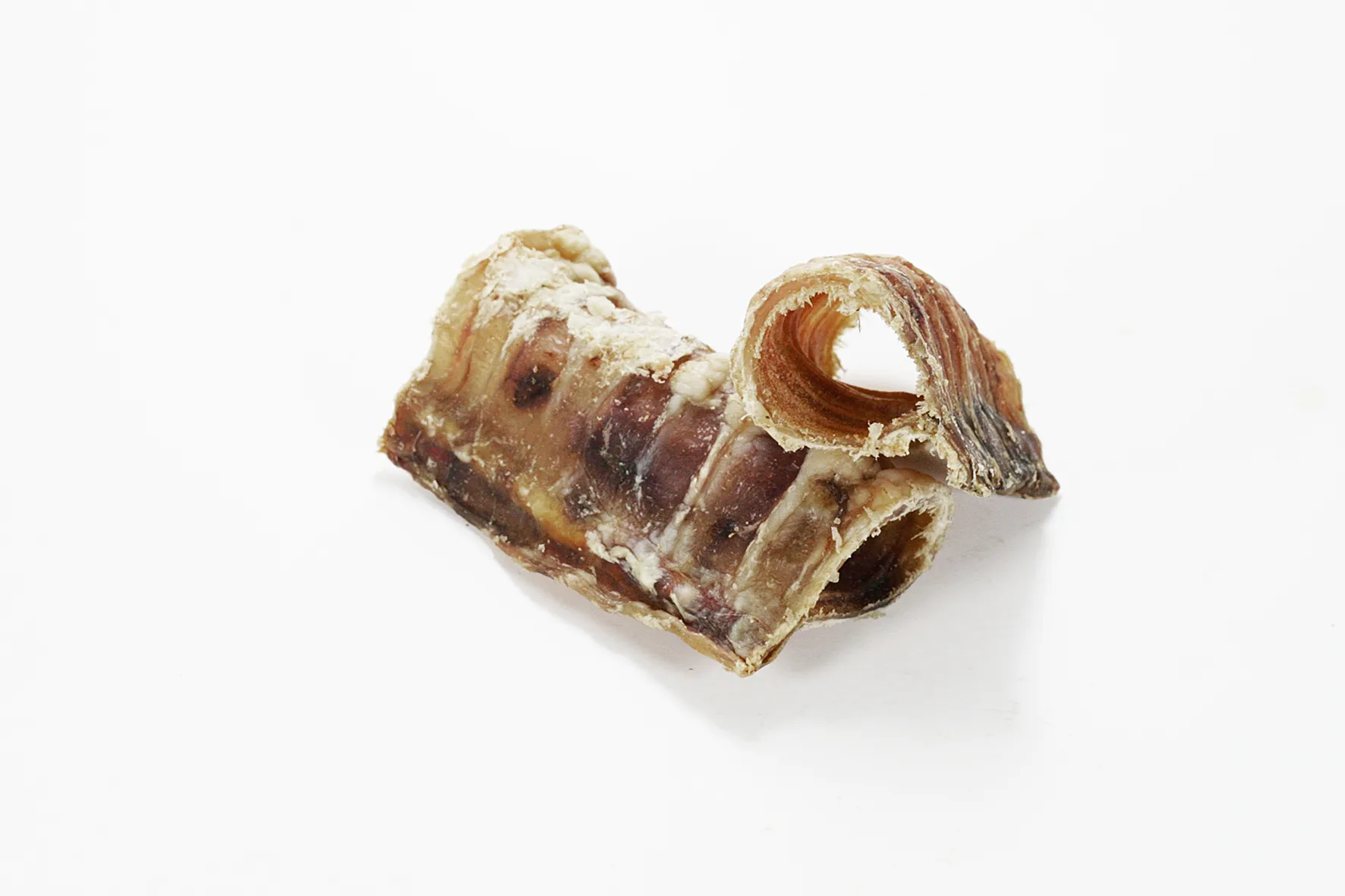
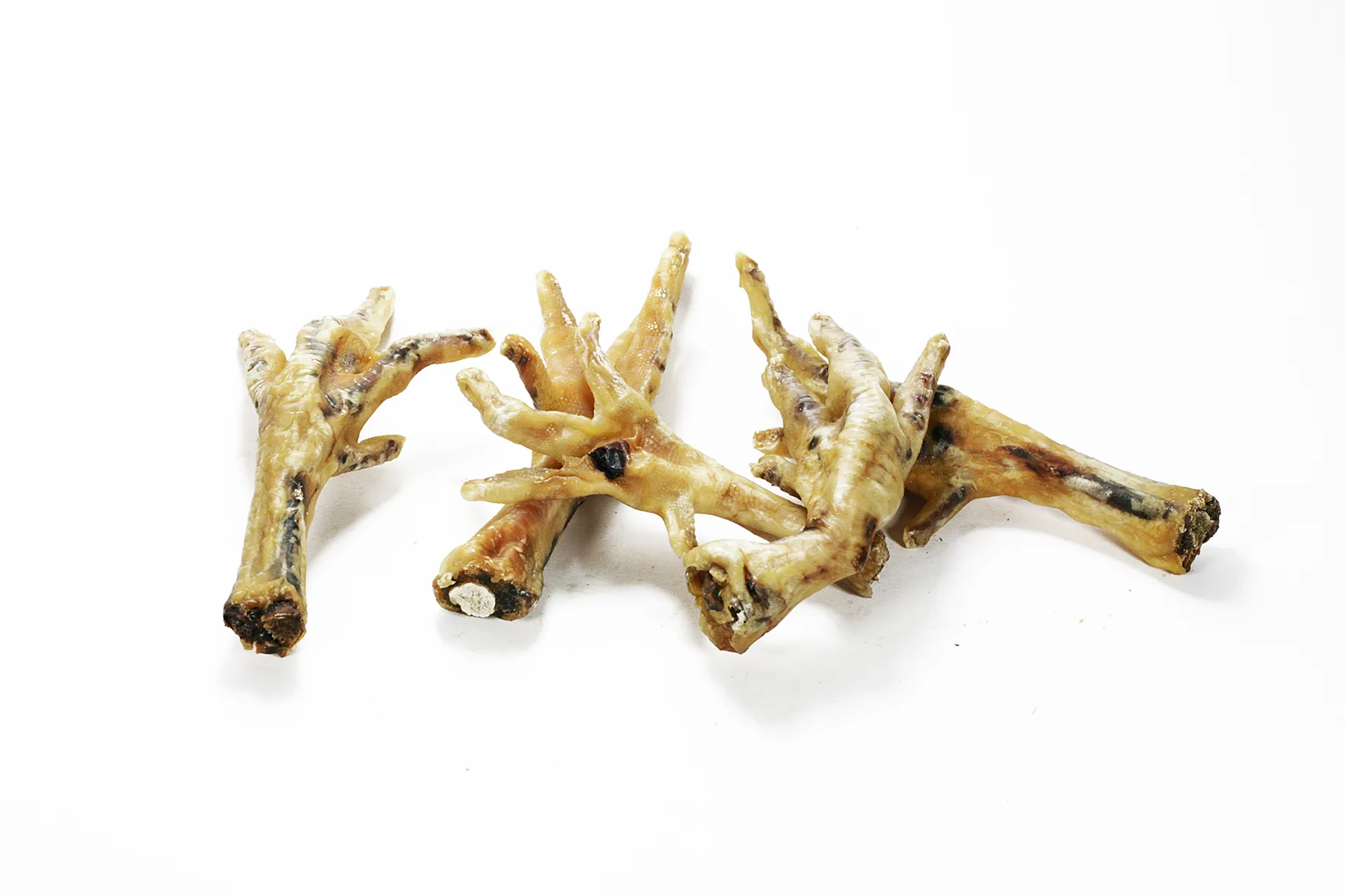
Current smaller formats include beef lung cubes, beef trachea pieces approximately five centimetres long and chicken feet. They appear here for a size comparison. Sharing a size category does not make them equally soft or equally divisible.
Three examples with different decisions
Beef lung cubes are pre-cut lung pieces rated one on the hardness scale. If you are preparing rewards, compare them with the larger lung formats on our training-treat page.
Beef trachea at approximately five centimetres consists of short trachea pieces. The shape and level-three hardness rating differ from lung cubes. Shorter length alone does not make this the same kind of reward.
Chicken feet are rated three and fall in the small size class. They contain bone and are not soft cubes. Share this specific product information with your veterinary practice when asking about suitability. They are included because of their dimensions, not as a general recommendation for small dogs.
Collect the information that matters
Record which format your dog has previously taken and chewed calmly. Compare length, outline, hardness and divisibility with the product page. Photographs show natural pieces; separate pictures are not presented at a common scale.
WSAVA recommends suitable size and supervision for treats. A shortcut such as choosing the smallest piece for the smallest dog is therefore not enough. Inspect each piece rather than relying on its category.
A small adult dog is not the same as a puppy
This page compares product dimensions. Puppies raise additional questions about age guidance and teething. Our puppy guide covers those. Similar body size does not mean a small adult and a young puppy need the same article.
If dental problems or a prescribed feeding plan determine the purchase, discuss the individual product first. A size class cannot answer that question. For texture alone, see the softer-chew comparison.
Read the pack choice before ordering
Check whether you are choosing a piece count or pack weight and which dimensions describe the article. Available packs appear on the product page. Manufacturer energy figures are unavailable, so small dimensions cannot give us a calorie amount or daily gram allowance.
Open the examples below to compare their details. Use the differences to ask a specific question if information for your own dog is still missing.
The formats side by side
On a small screen, swipe the table sideways to compare all columns.
| Format and ingredient | Size class | Chew hardness | Breakability |
|---|---|---|---|
| Beef lung cubes100% beef lungCut cubes | Mini, up to 5 cm | Very soft1 of 5 | Easy to break |
| Beef trachea, approx. 5 cm100% beef tracheaSections, approx. 5 cm | Mini, up to 5 cm | Medium3 of 5 | Partly breakable |
| Chicken feet100% chicken footWhole feet | Small, 6 to 10 cm | Medium3 of 5 | Partly breakable |
Source: the linked shop product pages. Hardness is our internal comparison scale, not a standardised dental test. Size classes describe the product, not the size of dog. Natural pieces vary.
For your choice: Lung cubes are the softest and easiest to break of these examples. Short trachea pieces have a different structure; chicken feet contain bone. Start with the lung comparison for a small training reward. A size class alone does not establish suitability.
Sources and editorial responsibility

Product details and product photos come from the Kaumaster range. The linked product pages list the declared composition, analytical values and available packs.
The supplied lifestyle photograph was retouched with AI to remove the originally visible object. It does not show a particular shop product and is not an individual product recommendation.
General guidance on treat allowance, supervision and suitable piece size: WSAVA: Feeding treats to your dog (PDF). This is general feeding guidance, not veterinary approval of an individual product.